


Teresa Sargeant
Key Points
- Florida Emancipation Day on May 20 marks when emancipation was proclaimed in Florida in 1865, distinct from Juneteenth on June 19.
- Speakers linked the state's emancipation history with current efforts to protect voting rights and oppose gubernatorial appointment of a local commissioner.
- Community advocates warned voters could lose the chance to elect the Orange County District 3 commissioner if Mayra Uribe doesn’t resign by May 28 deadline.
Community advocates and civic organizations used Florida Emancipation Day to link the state’s history of slavery with modern voting rights battles and a brewing dispute over how seats on the Orange County Commission should be filled.
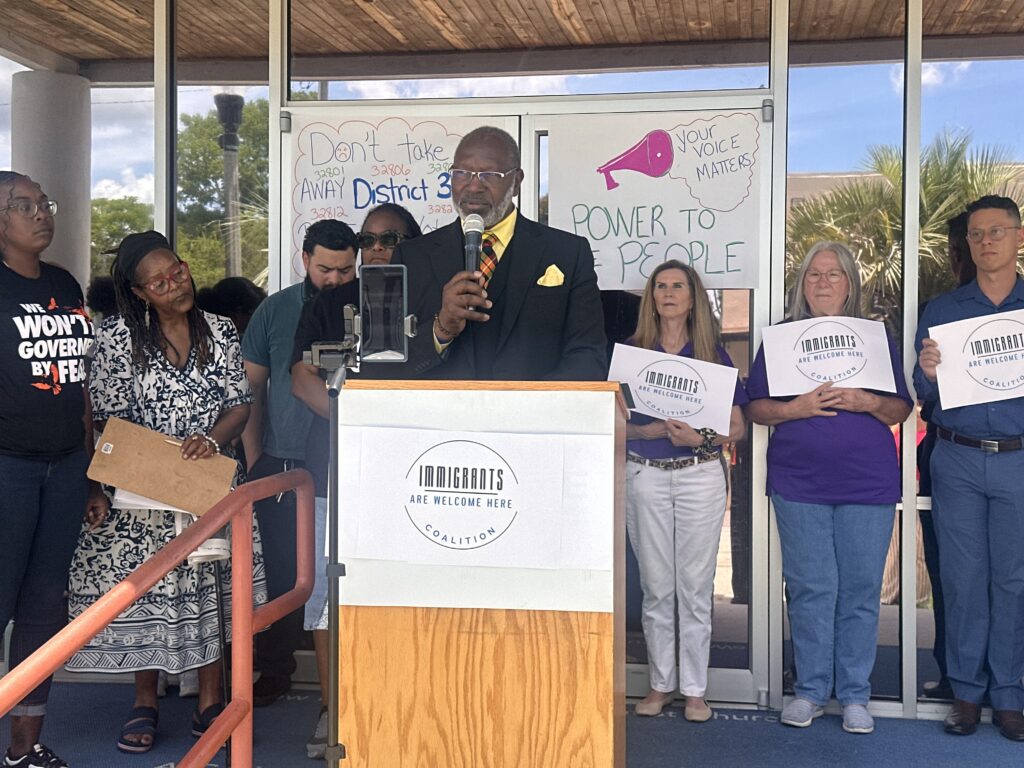
The Immigrants Are Welcome Here Coalition organized the press conference, which took place Wednesday afternoon on the steps of New Hope Missionary Baptist Church in Apopka.
The event both commemorated Florida Emancipation Day and warned that Orange County voters could lose the chance to elect a District 3 commissioner if Mayra Uribe doesn’t resign before a May 28 deadline, opening the door for a gubernatorial appointee.
Former City Commissioner and New Hope Missionary Baptist Church Pastor Alexander H. Smith read a proclamation from Apopka Mayor Nick Nesta recognizing May 20 as Florida Emancipation Day in the city, noting Florida’s observance of May 20, 1865, when emancipation was proclaimed in the state, 11 days after the end of the Civil War.
Florida Emancipation Day is distinct from Juneteenth, which marks June 19, 1865, when enslaved people in Texas learned they were free.
Speakers repeatedly tied the historic struggle for freedom and civil rights to current battles over voting access and who gets to choose local representatives.
Shakhea Hinton, director of communications and development for Hope CommUnity Center, said Emancipation Day is not only about recognizing the end of slavery but also “defending the full promise of democracy.”
“Communities should choose their representatives, not have representatives chosen for them,” Hinton said.
Speakers also criticized what they described as the possibility of voters being bypassed if Gov. Ron DeSantis appoints a replacement for Uribe’s District 3 seat instead of allowing voters to choose her successor on the November ballot.
Samuel Delgado, senior organizer with Central Florida Jobs With Justice, said local advocates are alarmed at the prospect of DeSantis appointing a replacement commissioner if Uribe remains in office past the resignation deadline.
Delgado noted “a pattern” for many years, before DeSantis took office, for the state to appoint successors to public office without public input.
Commissioner Mayra Uribe represents portions of southeast Orange County, including Conway, Oak Ridge, Belle Isle, Pine Castle and Azalea Park, which Delgado described as the historic core of the district.
“This isn’t like a partisan discussion, but just to say the pattern has been that Tallahassee has taken upon itself, a tendency to override the will of local government, to override the will of our communities, and that’s something that we stand in firm opposition to,” Delgado said.
Genesis Reyes, speaking on behalf of the Immigrants Are Welcome Here Coalition, tied the issue to her family’s experience immigrating from Cuba.
“My father came to this country at 16 years old,” Reyes said. “He knew what it felt like to live without a voice.”
Reyes argued the issue is about voter representation rather than partisan politics.
“This choice does not belong to him,” Reyes said, referring to the governor. “It belongs to the voters.”
The event also included remarks from representatives of Florida Rising and Engage Florida, who encouraged civic participation and youth voter engagement.
The coalition’s media advisory stated organizers wanted to connect “the legacy of Emancipation to current fights over voter access” and argue that “true liberation for Black, immigrant, and working families alike requires an unassailable right to vote.”
Author
Suggested Articles
No related articles found.