



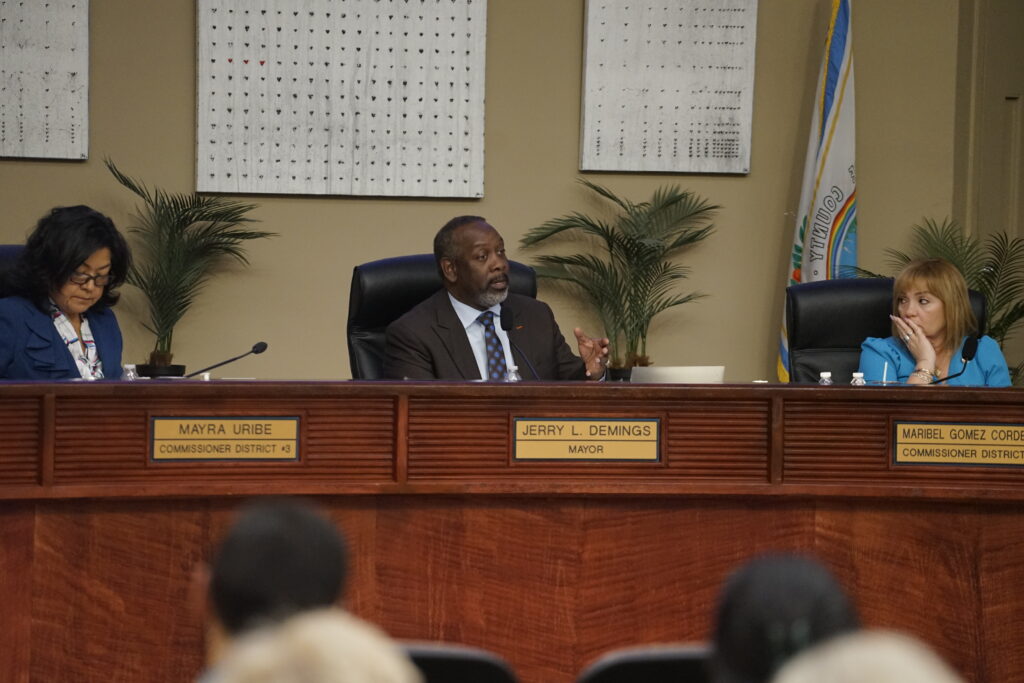
File photo
Key Points
- The Affordable Housing for Religious Institutional Lands program allows streamlined development of affordable housing on qualifying church-owned land in Orange County.
- All rental units under the program must be affordable to households at or below 80% of area median income, averaging 60%.
- The program's impact near Apopka is limited to unincorporated areas within the county's urban service area, excluding city limits.
A newly approved Orange County housing program could create opportunities for affordable housing on church-owned land in and around Apopka, though its local impact may be limited and gradual.
The Affordable Housing for Religious Institutional Lands (AHRIL) program – sometimes referred to as “Yes in God’s Back Yard,” or YIGBY – allows qualifying religious institutions to develop affordable housing on their properties through a streamlined approval process, even in areas where residential uses would not typically be permitted under existing zoning.
The program is designed to address rising housing costs by removing regulatory barriers and creating new development opportunities on underutilized land.
“It is trying to create some additional zoning flexibility and allowances to promote certain affordable housing projects in Orange County,” said Nicolas Thalmueller, a planning administrator with the county.
Unlike traditional projects that often require rezoning or future land use changes and public hearings, developments under the program can be approved through an administrative site-plan review by county staff based on criteria adopted by the Orange County Board of County Commissioners.
The program stems from a recent change in state law that gives local governments the option to allow housing on land owned by religious institutions, regardless of zoning. That statute requires only that at least a portion of the units be affordable, but Orange County went further by requiring that all units in rental developments approved under the program meet stricter affordability standards.
For rental projects, all units must be affordable to households earning no more than 80% of the area median income, with the overall project averaging 60%, according to county guidelines.
Orange County officials describe the program as a regulatory tool rather than a funding source. Thalmueller said projects are expected to be privately developed, with religious institutions using the new zoning flexibility to work with housing developers on their own land.
The Board of County Commissioners approved the program on March 10 as part of its consent agenda, with no discussion. Under the county’s Housing for All 10-Year Action Plan, YIGBY is another way to move forward the action plan’s goal of generating or protecting 11,000 affordable housing units by 2030, according to an Orange County government news release.
In Apopka, the program’s potential impact is shaped by geography and jurisdiction. The initiative applies only to unincorporated Orange County properties within the county’s urban service area – meaning it would not directly apply to land within Apopka city limits.
However, some unincorporated parcels adjacent to Apopka that fall within the county’s urban service area may qualify, and religious institutions on those properties could potentially participate.
The program differs from the state’s Live Local Act, which does not apply within the Wekiva Study Area – a designation that includes Apopka. The county’s AHRIL program does not carry that same restriction, but any development must still comply with all existing environmental regulations.
“There’s nothing in this program that exempts you from having to meet any of those environmental requirements that any other development would need to meet,” Thalmueller said.
Thalmueller said the county does not expect the program to produce large-scale development on its own, but rather to serve as one of several tools to gradually increase the supply of affordable housing.
“We don’t think that it’s going to change the entire world,” Thalmueller said. “We think we’ll get a handful of projects coming through, and even a small increase in affordable housing makes a difference.”
The program also includes compatibility standards intended to limit impacts on surrounding neighborhoods, including restrictions on building height, setbacks and where increased density can occur.
Thalmueller said those measures are meant to ensure new development fits with the existing character of nearby communities and is focused in areas that already have the infrastructure and services to support it.
The concept could align with churches’ missions, even if it has not yet gained traction locally.
“The Apopka Christian Ministerial Alliance has not been approached about this initiative, but it does sound interesting,” said Garry Proehl, president of the Apopka Christian Ministerial Alliance, a coalition of Apopka churches and ministers. “I personally do not know of any local churches doing this, but I am sure we would be open to discussions.”
Proehl said some churches already utilize their properties in limited ways, such as renting out existing homes on church-owned land.
“We would love to see everyone have affordable housing,” he said.
Author
Suggested Articles
No related articles found.