


Sarah Merly
Key Points
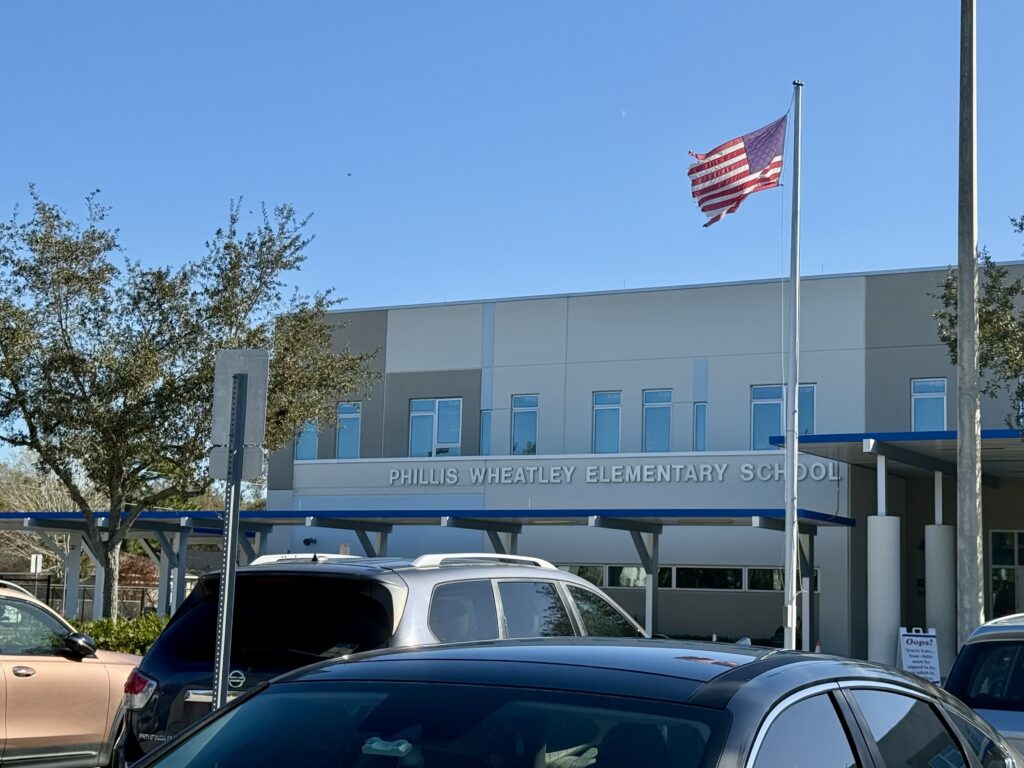
- Phillis Wheatley Elementary School, named after the African American poet around 1927, has a history of approximately 140 years in south Apopka.
- The school served Black students with limited resources until full desegregation, which caused cultural losses and job cuts for Black teachers.
- Phillis Wheatley earned a 'B' grade in 2010, was rebuilt in 2014, and continues to celebrate Black history and community pride under principal Tabitha Brown.
Phillis Wheatley Elementary School, originally a school for Black children, has educated thousands of students throughout its 140-year history and stands as a touchstone of cultural history in south Apopka.
“Here at Phillis Wheatley, we are focused on equity, access, and lifting historically underserved students,” said Tabitha Brown, principal of Phillis Wheatley Elementary School. “There remains an expectation that Phillis Wheatley will serve as both an educational and cultural anchor for South Apopka for years to come.”
An OCPS 150th anniversary webpage entitled “History of African-American Schools in OCPS” said that the school that merged into Wheatley opened in 1886. Another source, Jerrell H. Shofner’s History of Apopka and Northwest Orange County, Florida, said that the school was first named after the African American poet sometime around 1927.
“The school building was in such dilapidated condition that, when the Orlando firm of Hunt and Davis opened its Wheatley subdivision in 1926, five acres of it was donated for a school,” Shofner wrote. “With aid from the Rosenwald Fund, the school board then authorized $5,700 for a new four-room building which was completed in 1927.”
Similarly to how it stands at present, Phillis Wheatley was an elementary school from the 1940s through 1950, when the Clarcona school for Black children was integrated with it. Wheatley then became an elementary and junior high school in 1951. Four years later, grades 9-12 debuted, allowing Wheatley to accommodate all grade levels.
“Despite secondhand books, lower pay for their teachers and often substandard facilities, the schools were community hubs and sources of tremendous pride,” the OCPS webpage said. “[Wheatley] hosted events that drew the entire community, such as a homecoming coronation that included a king and queen in every grade… The boys’ basketball team in 1958 placed third in the national championships.”
One former student, Mary Brown, said she did not know about segregation when attending Phillis Wheatley.
“I didn’t really realize what segregation was,” Brown, 76, said. “The years I spent at Wheatley were beautiful. It’s really unimaginable. The teachers were very nice. We had very, very nice respectful children attending that school.”
In an interview, former Wheatley student and Apopka historian Francina Boykin echoed contentment in her school and with race relations. She said she loved her school so much that she would cry if she had to miss a day of class.
“We were very self-sufficient as a community and supporting of the school,” Boykin said.
Boykin said she was more fearful of desegregating than segregation, because she did not know what to expect. OCPS received a court order to desegregate in 1969, approximately 14 years after Brown v. Board of Education of Topeka first urged schools to do so.
“A group of eight parents sued in 1962,” the OCPS website said. “The final ruling in the case, Ellis v. Orange County Board of Public Instruction, required the district to desegregate fully, noting that the district had given black schools second-rate physical facilities, equipment, course offerings and instructional materials.”
Wheatley converted back to an elementary school when desegregation took effect. Because Boykin was in the class of 1970, she was required to transfer to Apopka Memorial High School for her senior year. Boykin said she remembered many of Wheatley’s teachers losing their jobs.
“They had already said the Black schools were inferior to the white schools, and so quite a few teachers lost their positions with Orange County at that time,” Boykin said. “I described it as the psychological traumas of school desegregation. Nobody asked us how we felt.”
Boykin remembered her sorrow when she found out she would not graduate from Wheatley. Although she now acknowledges desegregation as a good thing, particularly when it came to superior academics, she felt a great “sense of loss” when she transferred to Apopka Memorial High School.
“I felt a sense of loss of pride and culture,” Boykin said. “During the football game [at Apopka Memorial High School], we would go into a little huddle, trying to find the school spirit and shout our cheers from Phillis Wheatley that we did, and we just felt out of place, because the whole cultural aspect changed.”
Shofner credits Apopka Memorial High School’s principal, Roger Williams, for the eventual ease of integration tensions.
“There were tense moments for a while and some disturbances on the last day of school in 1970, but integration was accomplished,” Shofner wrote. “According to some Black residents, much credit is due to Principal Roger Williams for the successful transition. Although he was reluctant at first, after the change seemed inevitable, Williams worked hard to bring about full integration of his school without disrupting the academic curriculum.”
Since integration, Wheatley has seen its fair share of historical milestones. According to principal Tabitha Brown, the school earned its first grade of “B” in 2010, and the school was rebuilt in 2014.
Currently, only 60% of Wheatley students are Black, but the school still encourages pride in Black history. Students dressed up in African-American clothing for spirit week, and the students put on a musical program this month titled “The PWES Black History Experience: The Soul of a People.” Even after Black History Month, students gather to honor the birthday of the school’s namesake.
“Every year on May 8, we have a birthday celebration for Phillis Wheatley,” Tabitha Brown said. “Usually Ms. Francina Boykin comes out and other members of the community—they come out to speak to the students about the history of the school. We typically have one of our staff members dress up, and she’ll portray Phillis Wheatley and just provide history and information about her.”
During her time as principal, Tabitha Brown hopes students of every ethnicity take pride in their heritage and strives to help Wheatley get consistent rankings of “A” or “B.”
“I want the school to continue to thrive as the heart of the community,” she said. “I want us to be a school where families feel valued, students feel seen, and excellence is the expectation.”
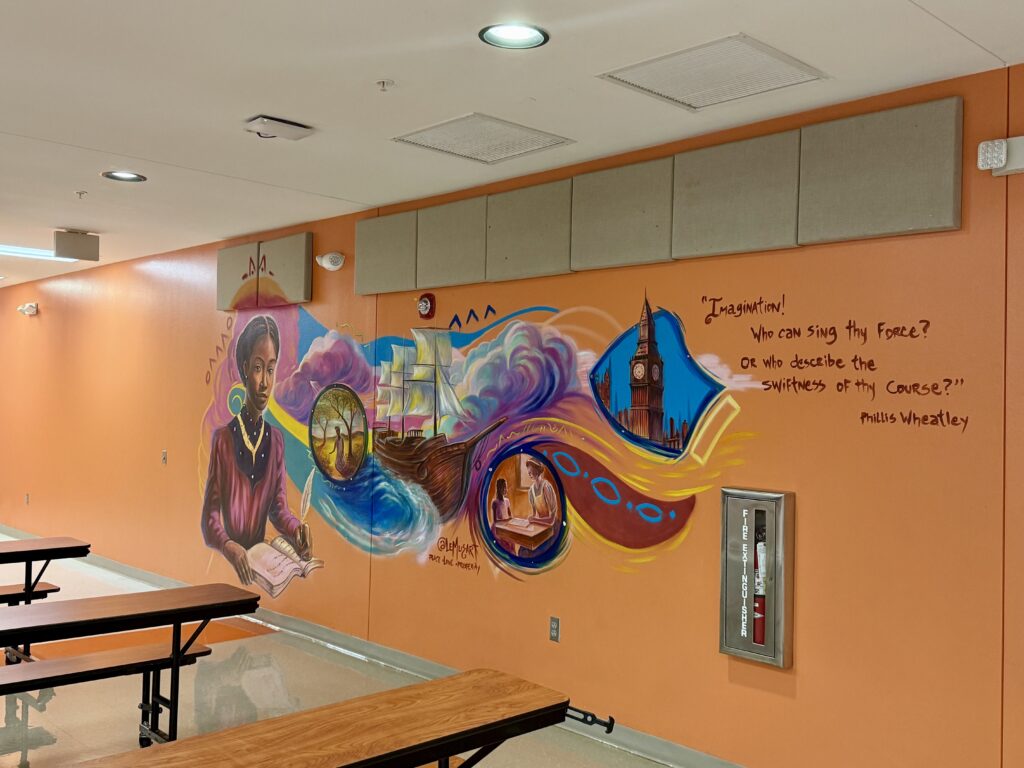
Although Boykin and Mary Brown’s Wheatley days are far behind them, they still carry pride in their school.
“We were taught to love one another, respect one another, and I was brought up like that,” Brown said. “As of this day, I hope I instilled that into my children—love and respect people, regardless of where they come from and who they are.”
Boykin still remembers her school song, which she would sing during the school’s chapel services. She sang and read it again in her interview with the Chief.
“You’ve taught us all the way of life that leads us on through joy and strife,” Boykin read. “With God our Maker and our King, He’ll help us all your praise to sing. Oh, Phillis Wheatley, our dear school, we’ll always try to keep your rules, to honor, love, respect, obey, and make good citizens in every way.”
Author
Suggested Articles
No related articles found.