




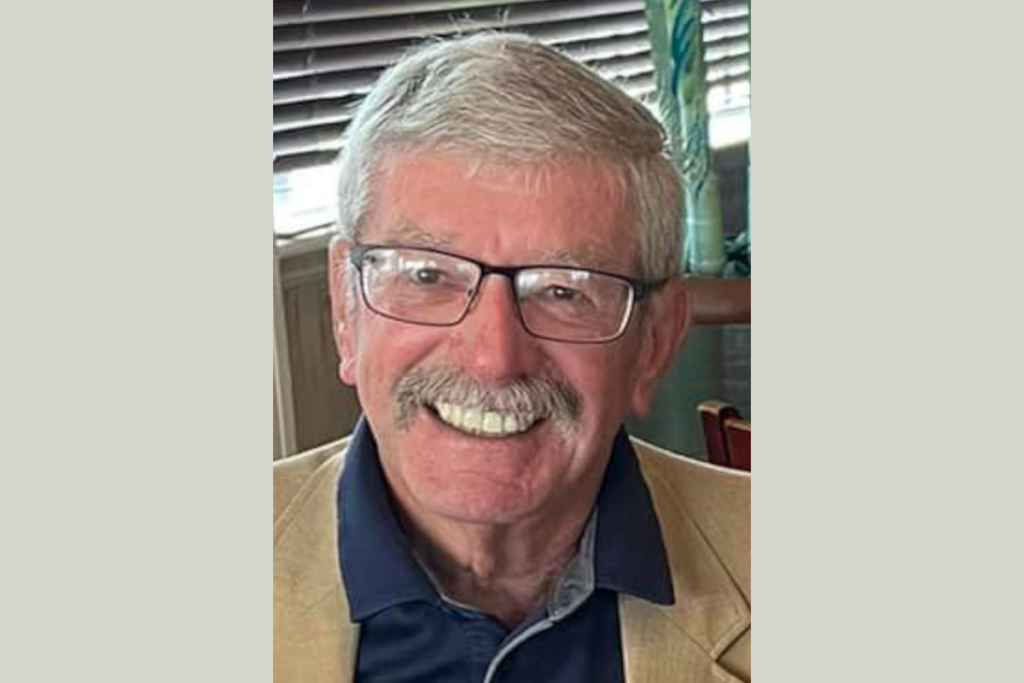
Official photo
Key Points
“April is the cruelest month.”
That is the opening line of T.S. Eliot’s “The Wasteland,” a classic chunk of so-called poetry that Mrs. Rusk tried heroically to explain to a room full of teen-agers in East Tennessee some 60 years ago.
Breath has rarely been as wasted as hers was in this event.
These children of soybean farmers had recently been chasing cows across frozen hills, chopping kindling, and huddling around Warm Morning heaters, breathing coal smoke and hoping the water pipes wouldn’t burst.
April looked pretty good to them.
Mrs. Rusk may have had a first name, but if she did, I was no more interested in it than I was in whatever was troubling T.S. Eliot bad enough to make him write this poem. I probably only remember her last name because her brother-in-law was U.S. Secretary of State Dean Rusk.
He was trying to draw the line on world communism, advising LBJ on what to do in Vietnam. We all know how that worked out. She was exploring 434 lines of incomprehensible blank verse with kids who sometimes drove tractors to school. You can probably guesshow that worked out.
I bet when the Rusk family got together for dinners nobody wanted to sit next to either one of them. I can imagine the host warning whoever did get stuck at that end of the table, “for goodness sake, don’t ask them about work.”
I have been told that poetry is not meant to be understood, that if it makes you “feel” something, it has done its job. Well, I can tell you that when we got to that part about Tiresias, an “old man with wrinkled dugs” who was awaiting “the young man carbuncular,” we were feeling plenty of stuff. I, for one, was up to my carbunculars in confusion.
The problem, I now know, was only partly the poem. The real issue was the immaturity of the students and partly the place we were in. As kids, we saw April as baseball, fishing, and in just a few weeks a vacation from poetry and algebra.
Adults in that place might have seen April as a time of plowing, setting out tomato plants, spring cleaning, paying taxes and looking ahead to sunburns, bee stings and sweltering nights in bedrooms without air conditioning.
As an old man in Florida, spending way too much time in my yard, I can see where T.S. Eliot and Mrs. Rusk were coming from. As a matter of fact, I am even coming to understand Dean Rusk and LBJ.
They must have looked at world communism the same way I look at dollar weed and its allies, like torpedo grass, sedge, stinging nettle, red sorrel and blue toadflax. Every time you pacify a little village of the stuff, it pops up somewhere else. But it is not a fight you can walk away from, because if it is not stopped, it will take over everything and destroy our way of life.
So we just keep pouring manpower, money and other resources into a fight that can’t be won. Nobody ever promised a light at the end of this yard-work tunnel, just blood, toil, tears and sweat. As lawn owners, we signed up for the duration, and we will fight it out on this line if it takes all summer. And it will.
When I consider the itchy, achy, sun-broiled weeks of futility ahead, I have one thought that gives me great comfort and helps me to go on:
At least I am not trying to teach poetry to hillbillies.
Author
Suggested Articles
No related articles found.