

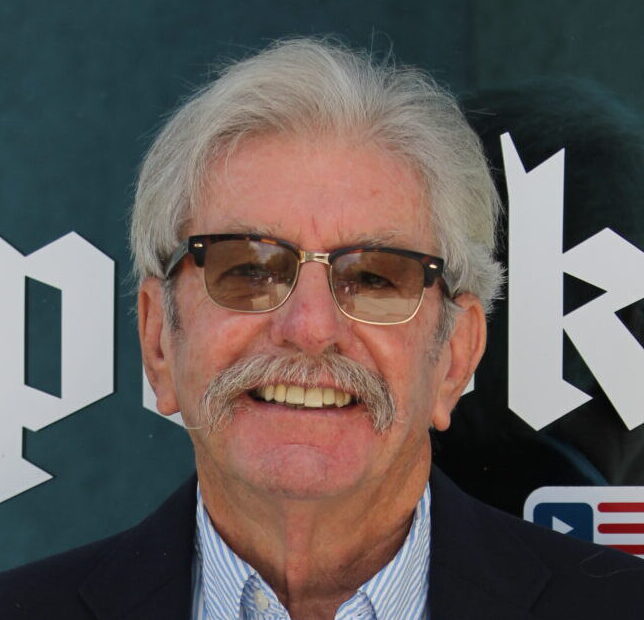

Photo by Vinnie Cammarano
Key Points
Some people are concerned about the future of public education while others worry about whether Social Security will be around as long as they are. Will Iran get The Bomb? Are the polar ice caps melting? How about identity theft, artificial intelligence, $4.69 gas, $75 steaks, do-it-yourself pronouns and whatever China is up to?
The list of worrisome things seems almost endless, so let’s add one more: I fear for the future of profanity in our culture.
I’m talking quality, not quantity. Ironically, the more we get of it, the less it is able to serve its purpose. What we are going through is like “The Boy Who Cried Wolf,” except this time around the boy is crying &%$#! That &%$#! is the kind of random symbols that used to be used in place of what were called curse words back when such words simply weren’t allowed.
We knew what the symbols meant because we all learned those forbidden words at an early age. Your father said them when he hit his thumb with a hammer. If you repeated them, your father might hit you with that hammer, but more likely with a belt. Or one parent or another or a teacher or a principal or any adult within hearing range might hit you with the back of a hand, a spoon, spatula, switch, paddle, ruler, hoe handle or, as in the case of one of my playmates, a shoe.
In anti-bullying efforts, children are now taught that words can hurt. In our day, we learned the hard way that some words can get you hurt, and it wasn’t all bad. In addition to keeping conversation civil, the power of profanity benefited the language as a whole.
Colorful expressions took the place of that which could not be said. The football coach at my high school used to fly into fits of rage and say, “I’ll be dad-diddly ding donged!” My grandmother’s phrase was “well, I swannee.” Some approached the border of blasphemy, like Holy Cow and Jeezo Capeezo. Rats, dang it, dadblamed, farkle, cripes, Jiminy and Great Googly Moogly also come to mind. When Perry White, editor of the Daily Planet in Superman comics, got agitated, he yelled, “Great Caesar’s Ghost!” I saw a lot of agitated editors in my journalism career, and trust me on this, that is not what they say in real life. It had to be cleaned up for print.
There doesn’t seem to be much of a reason to clean things up or come up with alternatives anymore. TV shows casually use wordsthat once would have gotten kids smacked with a spoon. Literary works contain language common in an Army barracks. Music? Well, let’s just say you don’t hear the words “doggone it” or “fudge” in rap songs and it seems acceptable. I would not be surprised to find that kindergartners are now singing “Louie Louie” instead of “Wheels on the Bus.”
In many cases, it is gratuitous profanity tossed in just for the sake of using it. It’s like kids walking around in their parents’ clothes, playing linguistic dress-up to try to look big. It doesn’t fit and it looks stupid. Worst of all, this sort of overuse waters down the whisky that used to be in these words and takes the kick out of them.
We need to keep a few 90-proof words in reserve for special occasions — like when thumbs are hit by hammers.
If we lose that, it will be a dadgum shame.