


Teresa Sargeant
Key Points
- The Vote Ready! Town Hall at St. Paul AME Church explained three Florida constitutional amendments and featured candidates discussing government spending and justice access.
- Candidates at the town hall discussed priorities like Medicaid expansion, education funding, and accountability in county spending amid financial pressures.
- Early voting in Orange County runs through Nov. 1 at 27 locations, including two in Apopka, operating daily from 8 a.m. to 8 p.m. before the Nov. 3 election.
Proposed tax changes on the Nov. 3 general election ballot could affect the local services residents rely on, speakers told a Tuesday town hall at St. Paul AME Church, where voters also questioned candidates about government spending, access to justice and support for small businesses.
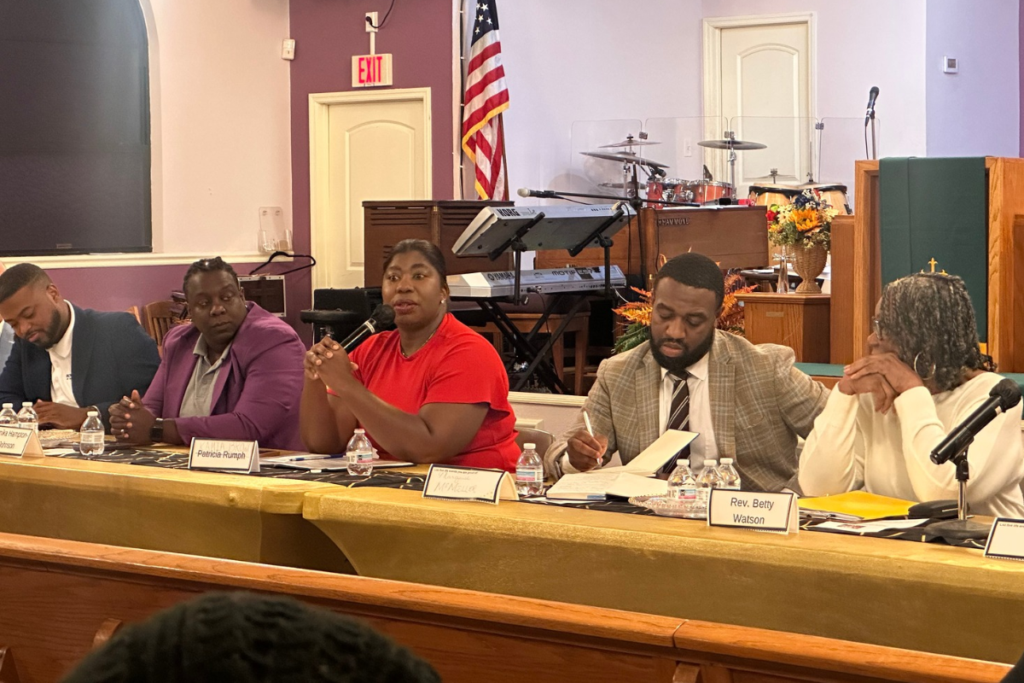
The Vote Ready! Town Hall combined explanations of Florida’s three proposed constitutional amendments with candidate introductions and audience questions. Organized by the church’s Social Action Committee, the nonpartisan forum took place at the South Park Avenue church. Organizers said participation did not constitute an endorsement by the church or its Social Action Committee.
Panelists included the Rev. Betty Watson of Faith in Florida; Cynthia Laurent, housing justice campaigner for Florida Rising; Orange County Clerk of Courts candidate Roberta Walton Johnson; state Rep. RaShon Young; Dr. Jarod Fox, a candidate for Florida House District 39; Marquise McMiller, Orange County Public Schools’ senior director of government relations; Ninth Judicial Circuit judge candidate Temika Hampton-Johnson; and former state Rep. Kamia Brown, a candidate for Orange County Commission District 2. State Sen. LaVon Bracy Davis also spoke briefly before leaving early.
For attendee Hedder Pierre Joseph, who had already voted during the current early voting, the gathering offered an opportunity to hear candidates and bring community concerns directly to them.
“It was important for me to come to the space to hear what the candidates had to say, and also to let them know what I’m hearing from the voters in the community,” Joseph said after the town hall.
Kesha Dawson Harris, representing the League of Women Voters, reviewed the amendments and urged residents to read beyond their titles. Constitutional amendments require approval from at least 60% of voters.
Dawson Harris explained that Amendment 1 would expand the state’s Budget Stabilization Fund, raising its maximum size from 10% to 25% of specified state revenue. She also discussed a proposed annual transfer and language allowing withdrawals for “critical state needs,” questioning how those needs would be defined.
Amendment 2 would exempt qualifying tangible personal property on agricultural land from taxation. Dawson Harris said the exemption, covering items such as equipment and machinery, would reduce local government revenue.
Much of her presentation focused on Amendment 3, which would increase the homestead exemption for non-school property taxes to $150,000 in 2027 and $250,000 in 2028. It would also lower the annual cap on assessment increases for non-homestead property from 10% to 5%.
Dawson Harris warned that reduced property-tax collections could affect local services, particularly in financially vulnerable rural counties.
School funding received separate attention during a presentation on Orange County Public Schools’ proposed continuation of its one-mill property-tax levy. McMiller said the levy supports instruction and student services and described financial pressures associated with declining enrollment.
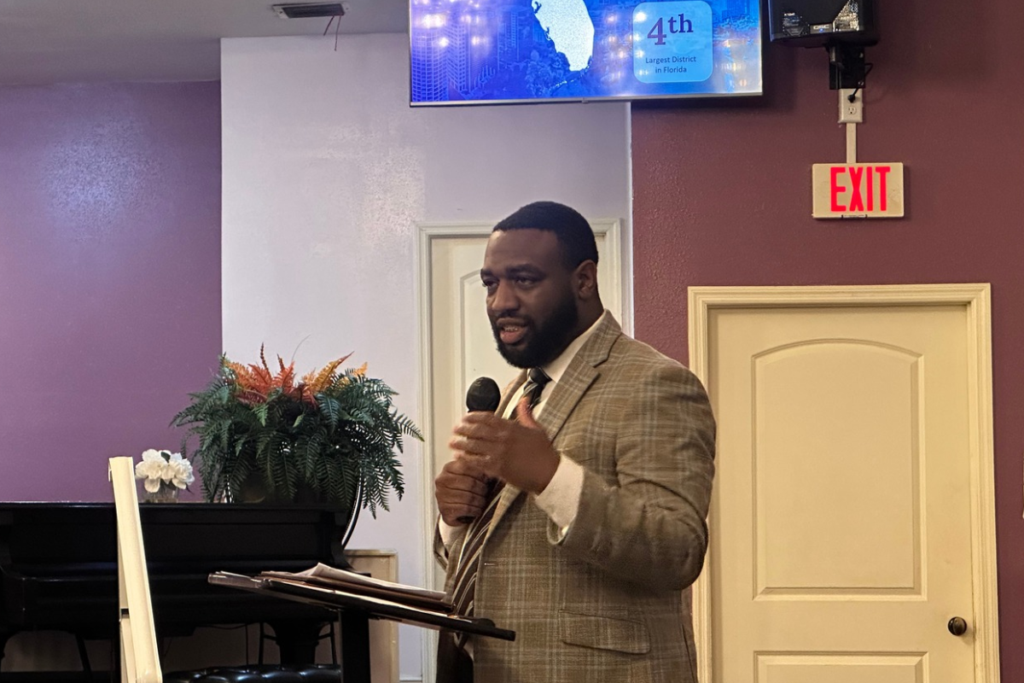
Candidates also outlined their priorities. Fox discussed Medicaid expansion, insulin affordability, public education and property insurance.
Brown urged voters to examine how services would be funded if proposed amendments reduced tax revenue.
“Where is the money to make up the services that our property tax pays for?” Brown said.
During audience questions, Joseph asked Brown whether she would support a 4% county commissioner salary increase and how she would approach county spending while residents faced financial pressures.
Brown said she would examine the data and cost of living. She expressed openness to salary increases because of elected officials’ workload and personal expenses, while saying she would be mindful of spending decisions.
Other audience concerns included an allegation of police violence and diminished opportunities for minority- and women-owned businesses.
Afterward, Joseph described a voting analogy her daughter had shared: Twelve people ride a bus, with three voting against going over a cliff, four voting for it and five abstaining.
“All 12 of us are going to go over that cliff,” Joseph said.
She connected the analogy to her responsibility to encourage others to participate, even after casting her own ballot.
Joseph said that “although I have voted, it is imperative that I stay engaged.”
“Please, I’m not telling you who to vote for,” she said. “Look at the issues, and you gotta vote.”
Early voting continues through Nov. 1 at 27 Orange County locations, including two in Apopka. Sites are open daily from 8 a.m. to 8 p.m. ahead of the Nov. 3 elections.