


Photo by Sarah Merly
Key Points
- Quest Training Center offers an eight-week Culinary Creations class teaching adults with developmental disabilities to prepare healthy, no-heat snacks safely.
- The program includes a global dessert theme with 16 participants visiting six stations to make dishes like Venetian crepe wraps and mochi parfaits.
- After completion, participants receive certificates and may continue with a storytelling course involving dancing and painting led by instructor Anjelicia Wilson.
Adults with developmental disabilities gathered Wednesday at the Quest Training Center to create desserts from across the globe, marking the sixth week of Quest’s “Culinary Creations” class.
“As the saying goes, ‘You can give a man a fish, or you can teach him how to fish,’” said Clement “Clem” Daniel, who serves as the center’s activity coordinator. “We are trying to teach them the core values of living in the community, living at home with themselves and their families.”
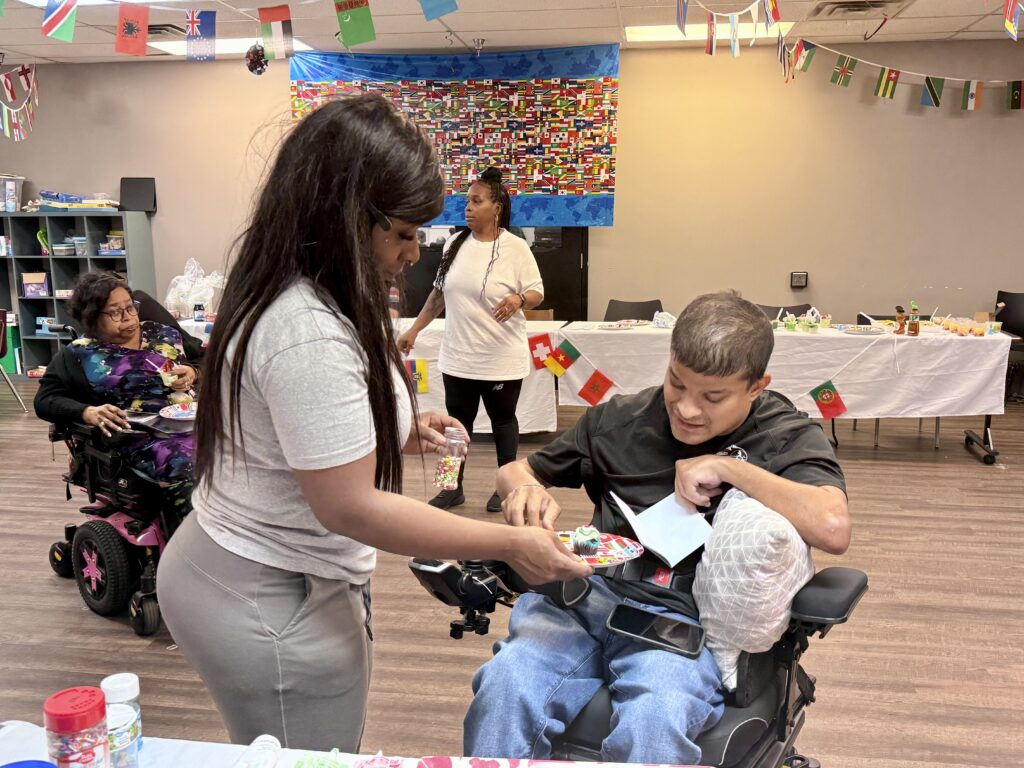
After receiving a “passport,” the 16 participants visited six stations, with each station representing a different country. Desserts included Venetian crepe wraps, “Parisian” chocolate fondue dip, the “Zen Garden” mochi-style parfait, and more, according to a Monday press release.
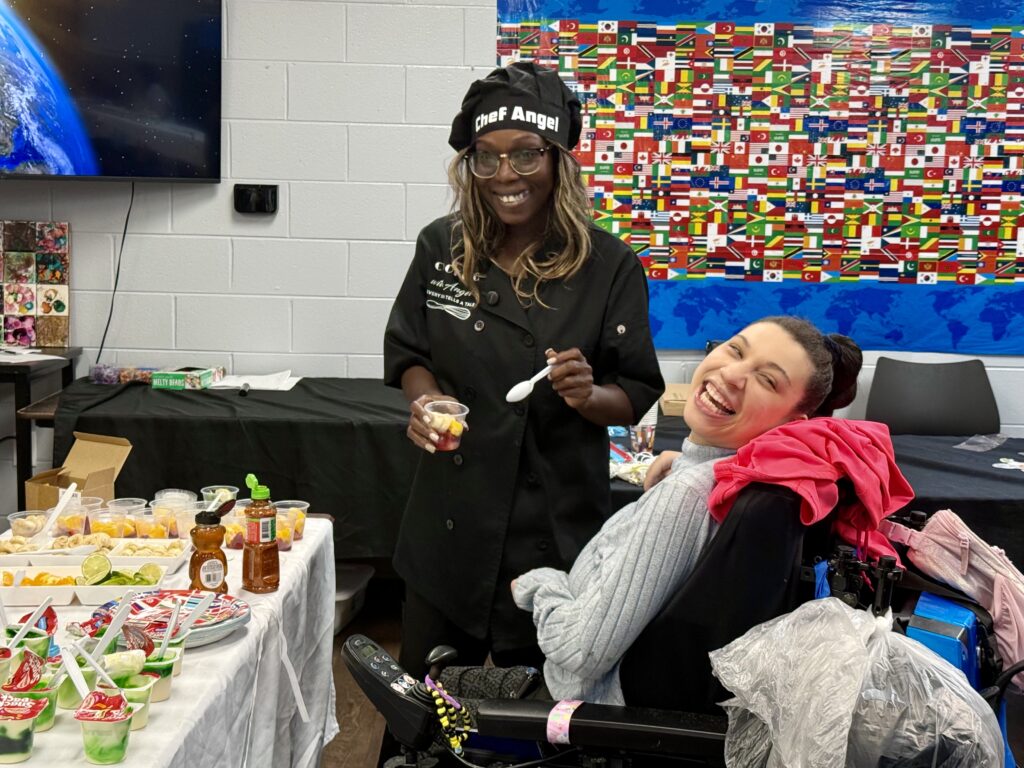
“Culinary Creations” instructor Anjelicia Wilson said she developed the eight-week curriculum for Quest after setting up a mock restaurant at the center.
“The residents really liked it, so that inspired me to come up with a curriculum that was designed to help them come up with healthy snacks that require minimum to no heat — meaning a lot of things that they learned to prepare in my eight-week culinary course, they can make at home, and they’re not things that require a stove or necessarily supervision,” Wilson said. “We’ve made things like finger sandwiches, salads, fruit salads, things like that.”
Wilson also emphasized to participants the importance of best health practices in the kitchen.
“We’ve been talking a lot about health and sanitation — making sure you properly wash your hands and learning how you prevent food-borne illnesses,” she said. “So not only are they learning how to properly prepare meals and snacks, but they’re also learning food safety.”
Daniel called the cooking program “empowering,” noting one family’s testimonial in particular.
“We actually had one parent tell us that when the client came one evening, they were about to get dinner started, and they came in and they saw the client starting to get dinner,” Daniel said. “It got them emotional — because think of all the years of you having to do this, and then at one moment, you realize, ‘I don’t have to worry about the survival of the person I’m caring about.’”
Both Daniel and Wilson said they feel particularly drawn to the developmentally disabled community, but for different reasons. Wilson called each of her students “sweet as pie,” since they love to give hugs. Daniel credited his work for building his character.
“Working with them has taught me things about myself,” Daniel said. “When I was a little child, I got pushed out of a window, and I got hurt bad. I was in a coma for weeks, and there are some clients here that — they’re in their situation because of similar cases. It gives me humility to realize that could have easily been me. That is the fulfilling thing about me being here — making me thankful every day.”
After completing the eight-week program, participants will receive certificates of completion. Wilson will then begin leading a storytelling course that will involve dancing and painting, according to Daniel.