



Teresa Sargeant
Key Points
- Apopka could lose about $60 million in revenue over five years if Florida voters approve a property tax amendment.
- The amendment aims to reduce property taxes on homesteaded properties and requires 60% voter approval to pass.
- Officials warn the revenue loss may cut funding for nonprofits and community events that shape Apopka's identity.
Apopka could lose approximately $60 million in revenue over the next five years if Florida voters approve a proposed constitutional amendment to reduce property taxes, Mayor Nick Nesta said Tuesday during the Apopka Area Chamber of Commerce’s Capitol Connection Legislative Wrap-Up luncheon.
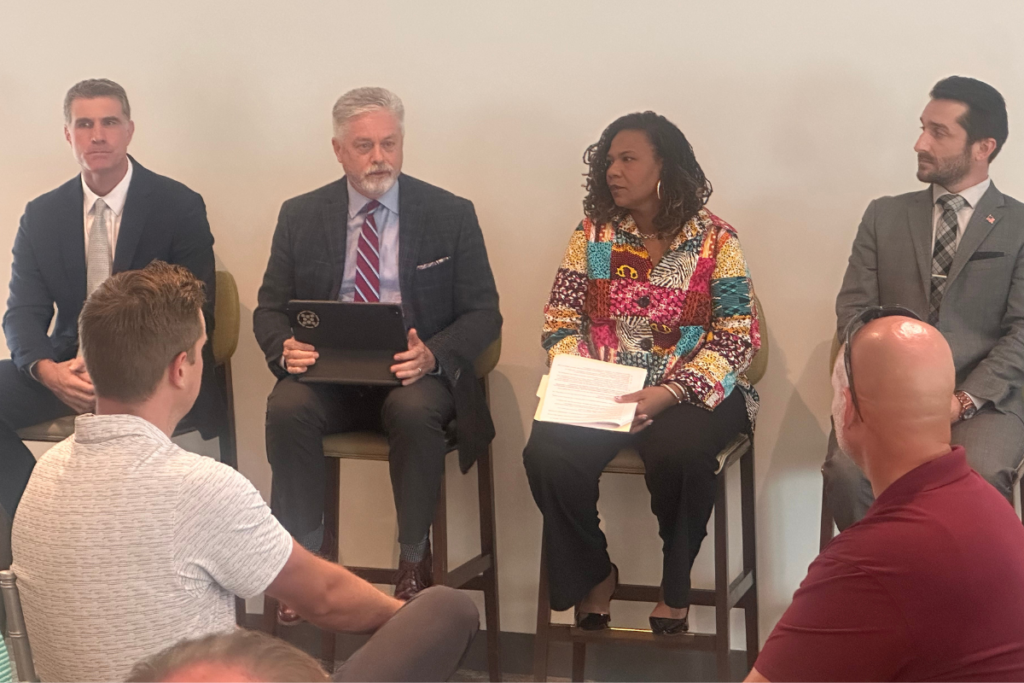
Speaking on a panel with state Sen. LaVon Bracy Davis, state Rep. Doug Bankson and Greater Orlando Builders Association Government and Legal Affairs Director Lee Steinhauer, Nesta said the city is already preparing for the possibility of reduced revenues while trying to preserve the services residents have come to expect.
The panel focused on legislation approved during the 2026 session, but much of the discussion centered on the proposed property tax amendment that will appear before Florida voters.
Nesta said the city will “figure it out” and that he will “continue to work day in and day out for the residents to get what they want and demand and need,” even if the transition is “a little painful.”
Nesta said the potential loss in revenue could affect discretionary spending, including grants to nonprofit organizations and community events that help define Apopka’s identity.
“If we get rid of those events that create community, we’re going to lose that feel,” he said. “We’re going to lose our residents to that because they’re going to go to other municipalities that have figured it out.”
The discussion repeatedly returned to the proposed property tax amendment, with panelists offering differing perspectives on its potential impact.
The proposed constitutional amendment, which Florida voters will consider in November, would further reduce property taxes on homesteaded properties. Supporters say it would provide homeowner tax relief, while critics argue it could significantly reduce revenue available to cities, counties and other local governments. The amendment would need at least 60% voter approval to take effect.
Bracy Davis, who voted against the proposal in the Legislature, said lawmakers moved too quickly before sending the amendment to voters.
“I am all for letting the voters decide,” she said. “I believe we gave the voters a bad product.”
She said many residents don’t realize property taxes fund services such as libraries and argued lawmakers should have done more analysis before placing the proposal before voters.
Bankson defended the proposal, saying homeowners need meaningful tax relief as housing costs continue to rise. While acknowledging implementation challenges, he said lawmakers can address those issues if voters approve the amendment.
“That’s something that I know, I know myself going in, that’s going to be job one when we get there, if the people choose this, is to sharpen the pencil and say, ‘Now here’s how we can make this happen, and everybody can succeed,’” Bankson said.
Steinhauer said the proposal could have far-reaching consequences beyond homeowners by changing how local governments fund services and evaluate future development.
“Local governments are already looking at it and saying, ‘We might have a revenue shortfall, so where are we going to make that revenue shortfall up?’” Steinhauer said.
He added that while the amendment could produce positive outcomes, it also carries significant uncertainty because cities and counties may have to rethink how they fund services and encourage growth.
Following the luncheon, attendee Sue Jordan, owner of Sue Jordan Sales Coaching and Consulting, said she appreciated the discussion and came away thinking more about how the issue could affect residents.
“I think the growth in Apopka is critical,” Jordan said. “I loved the comment about collaboration because I agree. Apopka is a very diverse community … and I think that is what will make Apopka stronger than some other municipalities if we can find a way for everybody to work together.”
Author
Suggested Articles
No related articles found.
Losing $ 60,000,000 of hard earned tax payer monies is a GOOD thing….Cutting the spending IS a better idea…ALL levels of ALL governments NEED to cut spending….as WASTE and useless projects are what drive up the millage..and inflation raises the cost of a home that is TAXED as IF it brings wealth to its owner..which it does NOT unless it is sold…then it should be TAXED NOT until then…