


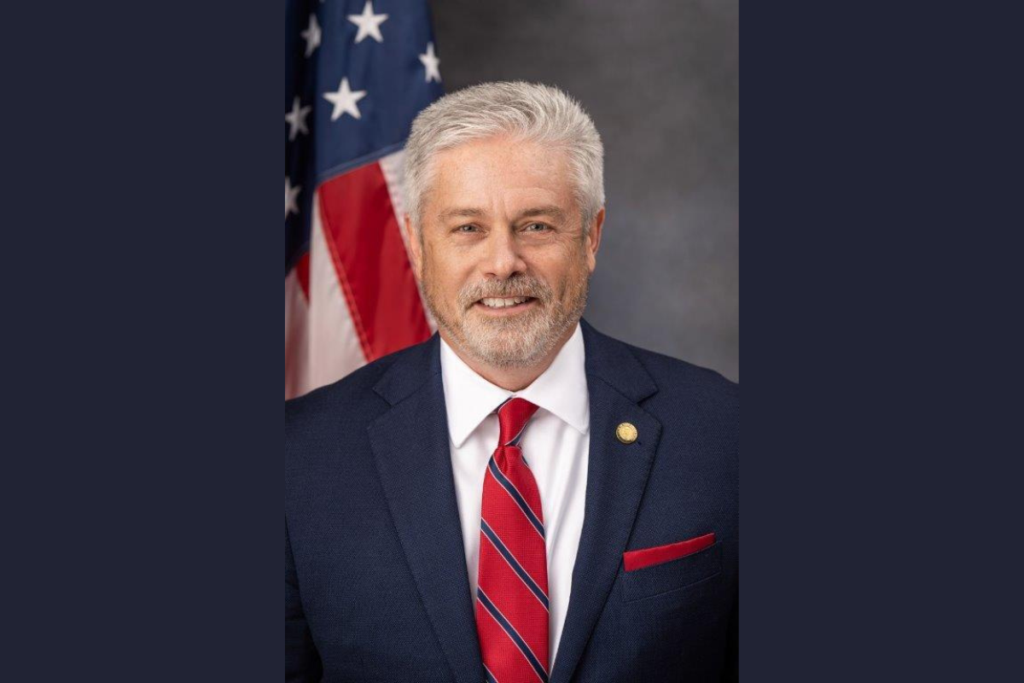
Official photo
Key Points
Last week, I was invited to attend the bill presentation for Senate Bill (SB) 432, Intoxicating Substances, at the Lake County Sheriff’s Office in Tavares. Although the governor has already signed this bill into law, effective Oct. 1, 2026, the purpose of this presentation was to honor the memory of a victim whose life was cut short due to the effects of nitrous oxide, one of the harmful substances from which the new law seeks to protect future victims.
Margaret “Meg” Caldwell was a young woman whose death has drawn attention to the risks associated with nitrous oxide use, also commonly known as “laughing gas.” This is a colorless, nonflammable gas with a sweetish odor (sometimes used as a sedative). According to reports following her passing, she regularly inhaled nitrous oxide, which is often sold in small canisters for recreational purposes and can lead to serious health risks when misused. Prior to the passage of this bill, Florida law did not specifically prohibit retail dealers from selling nitrous oxide for nonmedical purposes, despite the growing problem the state was seeing among young adults ages 16 to 30. SB 432 addresses this gap in regulation by prohibiting licensed dealers and their employees from possessing, selling, delivering, or giving this drug from their licensed premises, and a violation of this provision is a third-degree felony. Exceptions are provided for grocery stores and supermarkets, as well as for finished food products using nitrous oxide solely as a propellant. The Florida Department of Business and Professional Regulation (DBPR) is also directed to adopt rules to prevent nitrous oxide misuse for intoxication. I want to thank my prime co-sponsor, Representative Rachel Plakon, for her leadership in carrying this important provision, which designates the bill as “Meg’s Law” in honor of Meg’s memory and protects other young people from the same fate.
The other piece of this new law addresses xylazine—another harmful intoxicating substance that has become deadly. Xylazine, also known as tranq, is a drug used as a tranquilizer for large animals, including horses and elephants. In the hands of veterinarians, it has a proper use; however, in the hands of drug dealers, it is a deadly concoction that wreaks havoc upon unsuspecting users. This evil drug is often mixed with other drugs, including fentanyl, to increase potency and addiction. One of its most harmful properties is that it cancels the effect of Narcan, preventing it from resuscitating users and saving their lives. With continued use, this drug has a flesh-eating effect, even down to the bone. To put it into perspective, a mere 200 grams is enough to kill an entire city. To combat this deadly drug, this new law: (1) exempts the use of xylazine for veterinary purposes and (2) creates new criminal offenses related to xylazine. Though I had the privilege of running this piece of legislation this year, I’d be remiss if I didn’t thank Representative Plakon for sponsoring this bill last year and the Seminole County Sheriff’s Office for its continued advocacy on this issue.
Although this new law provides protections, the work of protecting young people from these deadly drugs is far from over. As a pastor, father and grandfather, I know firsthand that protecting our kids starts in the home. I would encourage you to have conversations with your kids as they grow into young adulthood about the harmful consequences that come with drug use, and assure them that you have an open-door policy when they have questions or concerns. In Meg’s honor, let’s all unite to protect our kids and help save lives.
Author
Suggested Articles
No related articles found.