



Teresa Sargeant
Key Points
- The city identified a construction roller as the source of significant vibrations at nearby Oak Ridge homes.
- Homeowner Janae Smickle reported shaking and cracks in her home. Whether construction caused the cracks remains unresolved.
- The city says the contractor repeatedly resumed the roller’s vibratory function after agreeing to stop, prompting inspector interventions.
- The city will contact residents who reported vibrations before project acceptance. The contractor is responsible for damage verified and attributed to construction.
Construction vibrations have shaken homes in Apopka’s Oak Ridge subdivision, according to a resident and city officials, prompting repeated city interventions after a contractor resumed using equipment it had agreed to stop operating in vibratory mode.
Janae Smickle, who lives on Berry Oak Drive, says she has noticed cracks and other changes in her home during nearby construction.
The city says vibration levels recorded during testing remained below thresholds commonly associated with structural damage.
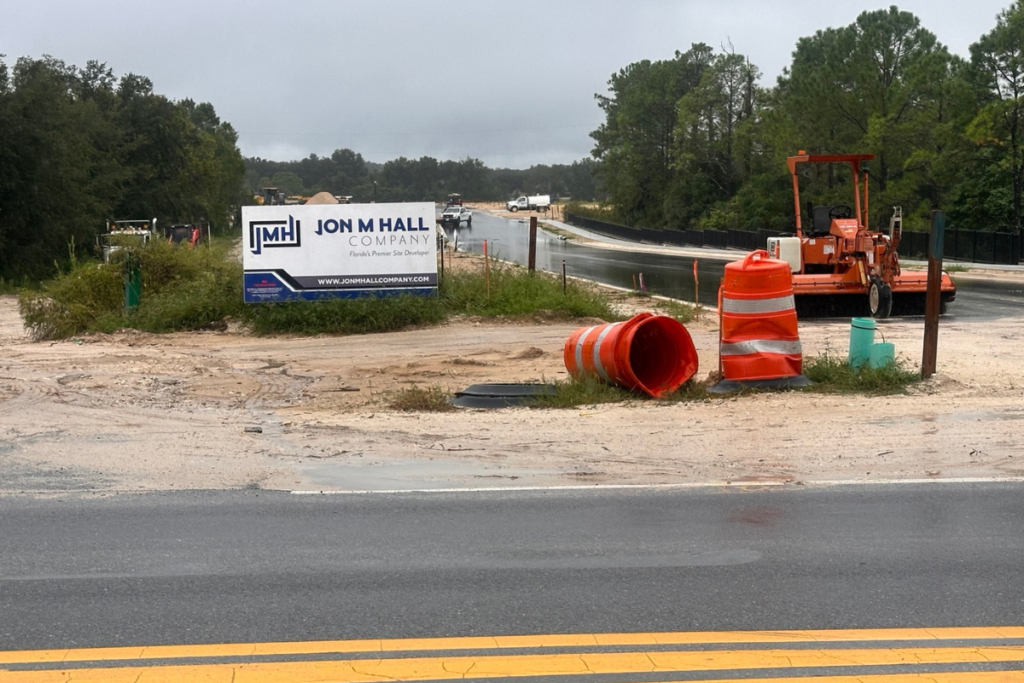
The city identified the work as the Chandler Row project, developed by MRP HNHB LLC, with Jon M. Hall Company serving as construction contractor. The proposed project calls for a 240-lot residential development at 4648 Chandler Road. The Development Review Committee approved the construction plans July 16, 2025, city spokesman Steven Montiero said in an email to the Chief.
Smickle said her household began noticing intermittent vibrations around January, with more intense shaking by early summer. She said she began documenting cracks and other changes after city employee Dale Smith advised her to photograph and monitor them.
“Once it got worse, and I would say that was probably about summertime … both stories would shake,” Smickle said in an interview with The Apopka Chief. “Bottles would move toward the edge of our shelf, that kind of thing. We’re like ‘This is not normal,’ so we were in contact with Dale [Smith].”
Her family has experienced other construction around the neighborhood, including a later phase of Oak Ridge, but she said none produced vibrations as noticeable inside their home as the current work.
Smickle said the shaking sometimes lasted hours when certain equipment was operating. She also reported new or worsening interior cracks and cracks outside near the pool.
She described feeling vibrations outside her home as well as indoors. She said a city employee visiting the neighborhood felt shaking while standing on the sidewalk.
Smickle’s concerns come amid repeated vibration-related complaints from nearby residents, according to city spokesman Steven Montiero, who said the city first received vibration-related complaints during the first week of June 2026. A Public Works development engineering inspector investigated and arranged a meeting involving residents, city staff, the contractor and developer to discuss concerns and construction practices.
In a June 30 email, Smith told Smickle the city was aware of the issue, had discussed it with the contractor and expected results from a testing company engaged by the contractor. During her interview, Smickle said she had not received an official report.
Montiero said Terracon, a geotechnical and testing firm hired by Jon M. Hall Company, conducted vibration monitoring and that the contractor supplied the results to the city.
The city provided the Chief with a one-page instrument-generated report showing vibration readings collected from approximately 8:37 a.m. to 4:34 p.m. on June 8. Montiero subsequently said the city had not received an additional report.
According to Montiero, the city determined that a large vibratory roller used for subgrade compaction, which is compacting the ground beneath the road, was the source of significant vibrations experienced by nearby homes.
The contractor agreed to discontinue the vibratory function, Montiero said, but it was used again on multiple occasions. The city attributed the subsequent use to changes in construction crews.
Each time new complaints arrived, the city dispatched inspectors and required the contractor to stop using vibratory compaction equipment, Montiero said.
Smickle described another episode during paving Sept. 28. She said the shaking stopped after the city intervened and the work was halted or changed.
Jon M. Hall Company executive vice president Joseph Webster declined to comment in a Monday email responding to the Chief’s questions.
Montiero said the city advised residents to photograph observed property changes if they wished to pursue claims with the contractor. He said the city does not perform structural inspections of private residences or adjudicate private property-damage claims.
As of Oct. 1, the project had not reached the stage at which it could request a certificate of acceptance, Montiero said. Before issuing one, the city will contact residents who reported vibrations so they can share remaining concerns or documented damage.
If damage is verified and attributed to construction, the contractor is responsible for resolving claims with affected residents, according to Montiero, who added the city would facilitate communication and ensure contractors respond appropriately.
As of Tuesday afternoon, the city had not answered follow-up questions about the monitor’s location, the equipment operating during testing or whether Terracon supplied a written interpretation of the readings.
Smickle worries that possible damage, particularly around the pool between the construction and her house, could become apparent after the contractor has moved on.
“We want to make sure that we’re not forgotten,” she said.