



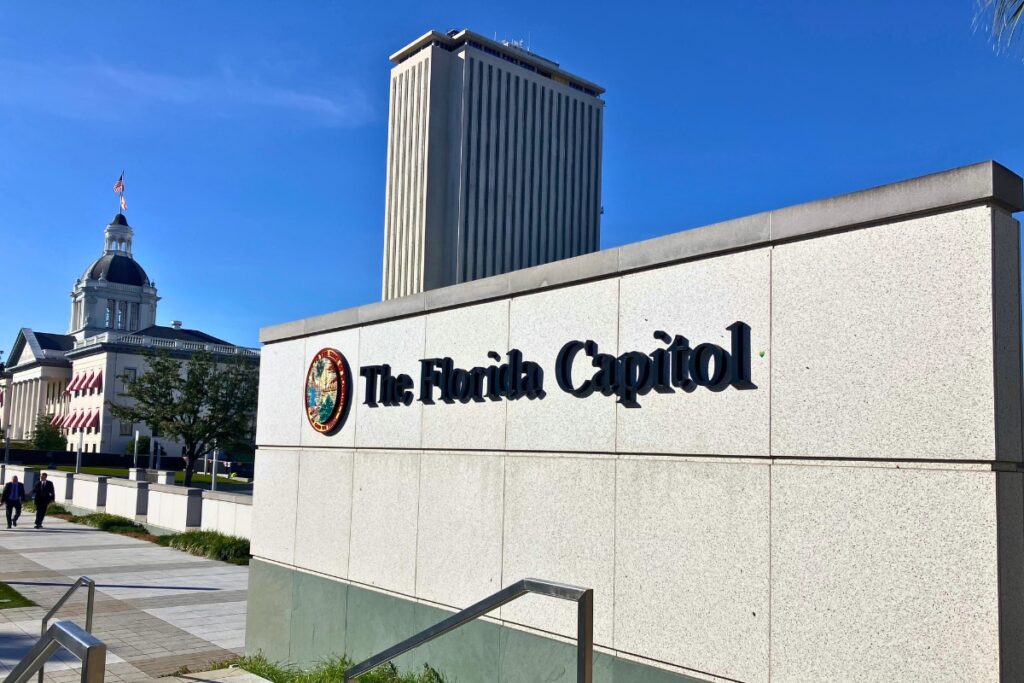
Photo by J.C. Derrick
Key Points
- Amendment 1 would increase Florida's Budget Stabilization Fund cap from 10% to 25% of net revenue.
- Amendment 2 would exempt tangible personal property used in farming from local taxation, passing the House 110-1 and Senate 37-0.
- Amendment 3 would increase the homestead property tax exemption from $50,000 to $250,000 over two years, potentially reducing local government revenue.
Florida voters will decide on three statewide referendums when stepping into the ballot box on Nov. 3, with 60% approval needed for each to pass.
Amendment 3 would increase the property tax exemption for homesteaded properties and has inundated the election season. According to a University of North Florida poll, 31% of likely voters have heard “a lot” about the amendment.
Amendments 1 and 2 have fought for the remaining airtime.
The UNF poll said passing Amendment 3 will be a longer shot than previously reported, with 50% of respondents planning to vote in support, 35% planning to vote in opposition and 14% saying they remain undecided.
Here’s the rundown on the ballot initiatives.
Amendment 1
Passed House: 100-1
Passed Senate: 29-4
If passed, Amendment 1 would allow the Florida Legislature to keep more revenues in the state’s Budget Stabilization Fund (BSF) as emergency reserves and mandate an annual transfer to replenish the reserves.
Florida’s BSF is currently capped at 10% of the state’s annual net general revenue. In 2024-2025, the reserves sat at 9.3% of that net general revenue. Amendment 1 would increase the ceiling to 25%.
To fund these reserves, the amendment would require the Legislature to transfer $750 million to the BSF or, if lower, the amount of money needed to reach that 25% cap.
So, if the BSF needs $200 million to reach the cap, the required transfer would be $200 million. But if the BSF still needs $1 billion to reach the cap, the Legislature would need to transfer $750 million—the maximum required transfer.
The amendment allows the Legislature to withdraw from the BSF for emergencies, revenue shortfalls or critical state needs if approved by a two-thirds vote.
In years when the state withdraws from the fund or has a critical need, the amendment wouldn’t require the $750 million transfer.
Amendment 2
Passed House: 110-1
Passed Senate: 37-0
Florida allows local governments to tax land property and tangible personal property, with exceptions. This amendment would completely prevent taxing tangible personal property that is typically on agricultural land, used for farming or agritourism and owned by the landowner or leaseholder of the land.
Instead, these agricultural landowners would only be taxed through property tax and not the tangible personal property.
The Legislature placed the amendment on the ballot with only one dissenting vote in either chamber. State Rep. Anna Eskamani, D-Orlando, voted in opposition, citing loss of taxes for local governments and benefits for primarily large corporations.
Amendment 3
Passed House: 75-26
Passed Senate: 30-9
Grabbing national headlines, Amendment 3 has been the talk of the state for months, with three main changes.
First, the amendment would increase the current $50,000 homestead exemption to $150,000 and then $250,000 over the next two years. The exemption applies to homeowners, and critics call it a taxing shift rather than a true tax cut. Local governments can choose to, or arguably be forced to, increase the millage rate to compensate, hitting renters and non-homestead properties harder.
Second, the amendment would also limit local government expenditures, requiring property taxes to be spent only on infrastructure, public safety, education, natural resources, debt service, retirement benefits and government operations and administration.
Lastly, the amendment prevents caps on assessed property values from rising more than 5% year over year, compared to the current 10% cap.
Supporters say the government shouldn’t tax a home owned outright by a resident. They say a resident never truly owns their home if they must pay the government or risk it being taken.
Critics also argue that property taxes aren’t paying rent to the government for nothing. They say it’s a payment for the services provided. If you drive to visit a park, tax dollars provide the road, sidewalk and playground infrastructure. Property taxes are paying for the services used by residents.
The lead-up to Amendment 3 started over a year ago. Gov. Ron DeSantis visited Gainesville and announced a “DOGE” audit into the city, saying local governments were wasting taxpayers’ funds and should cut bloated budgets.
A wave of local government DOGE audits followed. Republican leaders have pointed to the audits as proof that local governments could cut waste and absorb the impact of a high homestead exemption.
But the amendment has received significant bipartisan opposition, including from the Florida Senate President Ben Albritton, R-Wauchula; former Senate President Kathleen Passidomo, R-Naples; the Florida Sheriffs Association, with Republican politicians often earning strong support from local sheriffs; the Florida State Fraternal Order of Police; and the Florida Professional Firefighters.
Editor’s note: Mainstreet Daily News, sister publication of The Apopka Chief, originally published a version of this story here.