



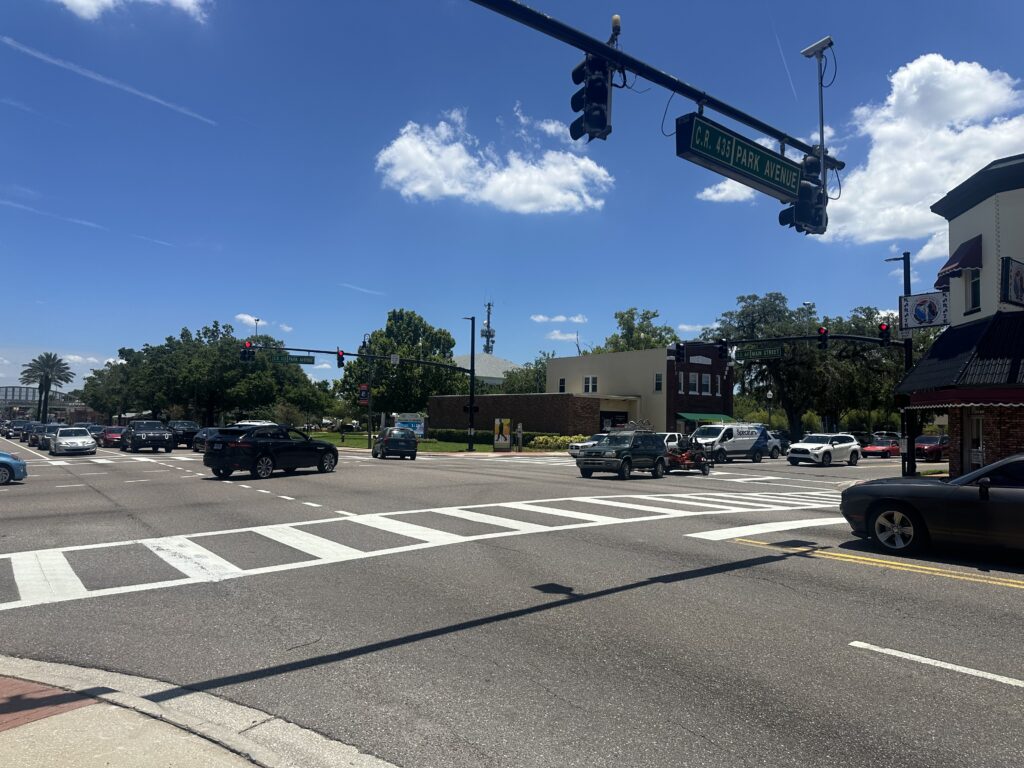
File photo
Key Points
- The Apopka Community Redevelopment Agency spent over $1.7 million in 2025 on infrastructure projects like the Downtown Apopka Trail and park improvements.
- The CRA awarded $46,243 in façade renovation grants to four commercial properties, but no funds were given through the Building Code Assistance Program in 2025.
- The CRA Board will change after April 28, with two new commissioners replacing Smith and Nesta and a new mayor replacing Bryan Nelson.
The Apopka Community Redevelopment Agency’s (CRA) annual report shows continued investment in infrastructure and neighborhood improvements in 2025, while some vacant storefronts and limited participation in business assistance programs remain in parts of the district.
According to the report, which is now available on the city’s website, the agency spent more than $1.7 million during the reporting period on projects including the Downtown Apopka Trail, park improvements and public safety initiatives. The agency’s fiscal year (FY) 2026 adopted budget totals about $6.3 million, including more than $4.7 million carried forward from prior years for redevelopment projects.
In an email, Economic Development Director Antranette Forbes said decisions on when to deploy those funds are guided by the CRA’s redevelopment plan, board-approved work programs and the readiness of specific projects.
The CRA was established in 1993 to address blight and encourage reinvestment within a 633-acre redevelopment area through tax increment financing. The report highlights completed projects and ongoing programs aimed at improving infrastructure, supporting businesses and stabilizing neighborhoods.
However, direct financial assistance to businesses remained limited. The agency awarded $46,243 in façade renovation grants to four commercial properties during the year, according to the report.
The CRA’s Building Code Assistance Program, which is designed to help businesses address compliance issues that could prevent properties from being occupied or reopened, remained available during the 2025 reporting period, though no funds were awarded.
Forbes said the report reflects calendar year 2025 activity and that the Building Code Assistance Program remains open to eligible participants.
She also said the CRA does have targeted initiatives aimed at addressing vacant storefronts and blighted commercial properties, though she did not provide additional details.
The CRA does not currently have readily available data on vacant or underutilized commercial properties within the district, according to Forbes. She directed those seeking information on available properties to the city’s online real estate database, which lists commercial properties for lease or sale.
The report also notes that no funds were expended on low- and moderate-income affordable housing during the reporting period, though the agency increased funding for its Residential Renovation Assistance Program, which supports home repairs and improvements.
CRA officials say the agency continues to focus on long-term redevelopment goals, including infrastructure investment, economic development and neighborhood stabilization.
“As the CRA moves into Fiscal Year 2026, the Agency will continue to focus on initiatives that stimulate private investment, improve neighborhood conditions, expand recreational opportunities, and strengthen economic vitality throughout the redevelopment area,” the report states.
The current CRA Board is comprised of Mayor Bryan Nelson as chair; Vice Mayor Diane Velazquez and commissioners Alexander Smith, Nadia Anderson and Nick Nesta; and Orange County representative John J. Drago. A seventh seat, previously held by Cheniqua “Nikki” Williams, has been vacant since last year.
The board faces significant change as the new City Commission is seated on April 28. Commissioners-elect Yesenia Baron and Sam Ruth will replace Smith and Nesta, while the winner of the April 14 mayoral runoff between Nesta and Christine Moore will replace Nelson.