


Photo by Sarah Merly
Key Points
- Seven candidates for Orange County mayor and commission district debated on youth career development, affordable housing, and budget challenges on June 18 in Apopka.
- Candidates discussed solutions for affordable housing including rent control, transit development, and accountability for large employers.
- The forum addressed immigration concerns, with candidates advocating education on rights and expanded legal services for immigrants in Orange County.
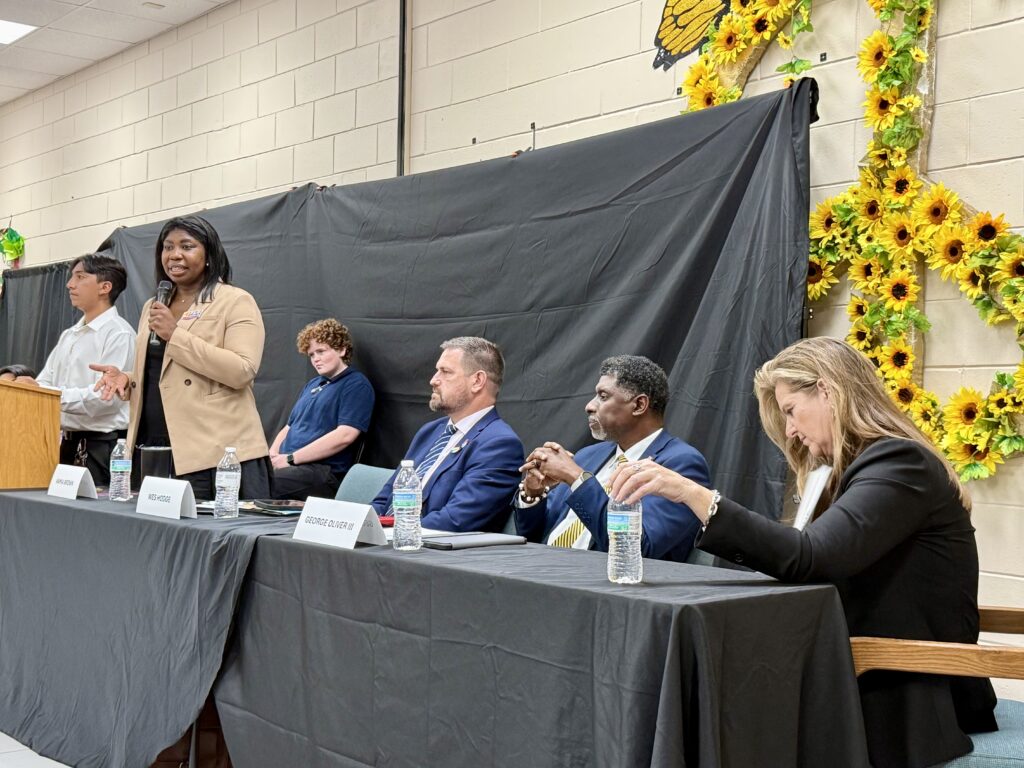
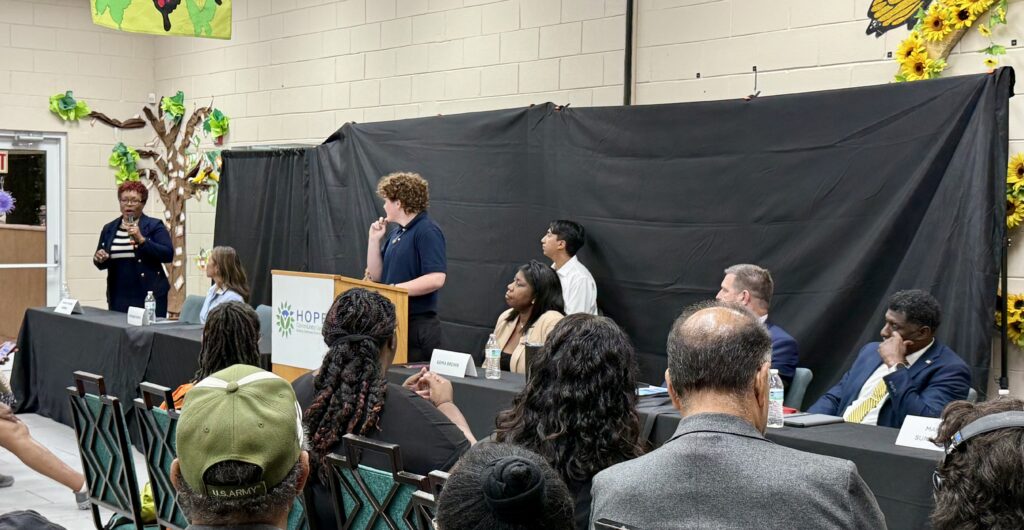
Seven candidates appeared at Apopka’s first Orange County election forum of the year on Thursday night to discuss affordability, taxes and other topics prior to the Aug. 18 election.
The community forum included three candidates for Orange County mayor and four in the race for Orange County Commission District 2. Area students participating in the center’s youth leadership program moderated the debate and welcomed the crowd. To watch the full forum, visit the Hope CommUnity Center Facebook page.
Youth career advancement opportunities
The first question of the evening asked candidates for their plans to expand career development programs for area youth, such as those at Hope CommUnity Center.
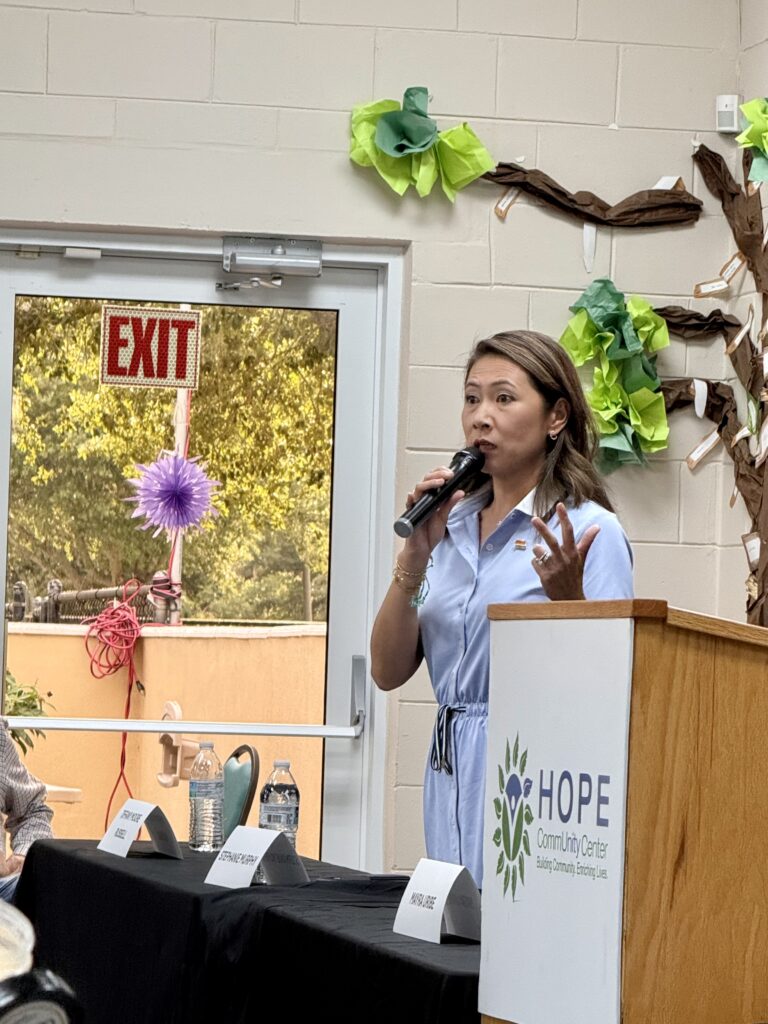
“If I were elected mayor, I would implement a program very similar to what is in Osceola—they call it Osceola Prospers,” said mayoral candidate Stephanie Murphy. “It essentially is a promise to every high school kid that they will have access, a scholarship that gives them the next dollar to make sure that they are able to get a trade degree, a tech degree, or an associate degree. Those are pathways into the middle class, and they are ways in which we can fill a labor shortage that we are experiencing in this community.”
Fellow mayoral candidates Tiffany Moore Russell and Mayra Uribe shared their desires to expand internship opportunities across county departments and provide students with opportunities beyond the hospitality industry, respectively. In contrast, commission candidate Marsha Summersill shared her desire to capitalize on the presence of hospitality corporations in Orlando, while fellow candidate Kamia Brown suggested starting youth job fairs.
“There are many services, many programs, many opportunities here that currently exist here in Orange County,” Brown said. “However, northwest Orange County often is the last one to get notified… What we need to do is to do education and make sure our community is aware of these opportunities.”
Affordable housing
The evening’s second question asked candidates to explain what they believe the county’s role should be in “addressing affordability” and how each candidate would “help residents remain in the communities they call home.”
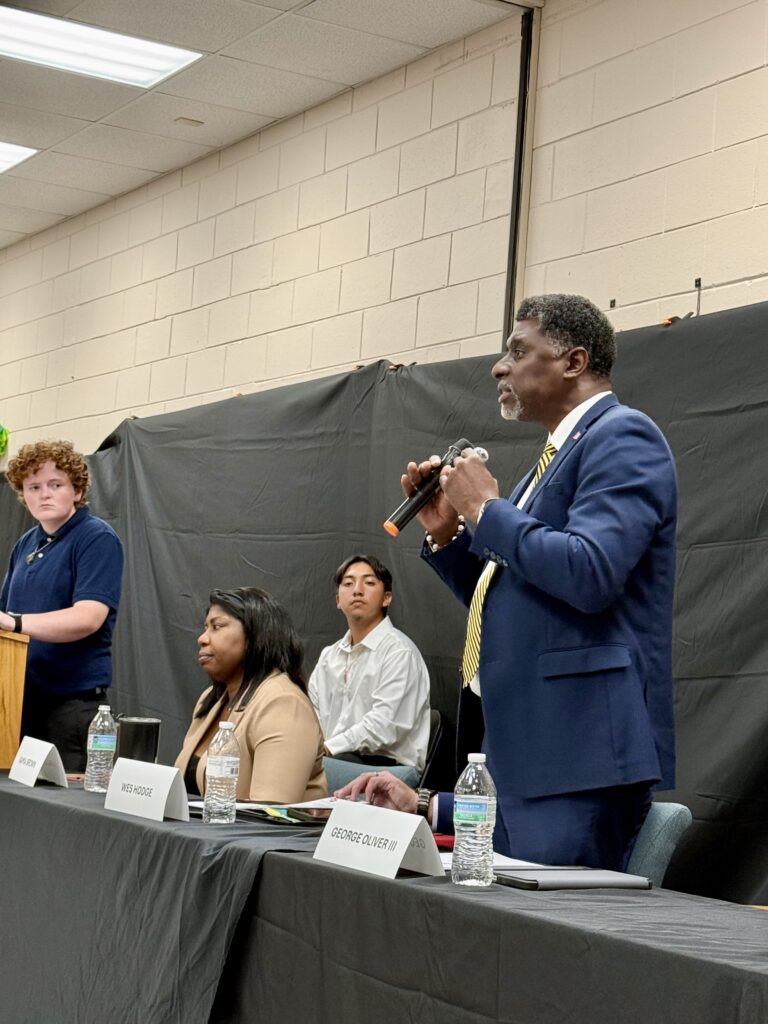
“The county has an $8.3 billion budget, and they put aside $17 million of that budget for affordable housing, which is just a fraction of what our budget is right now,” said commission candidate George Oliver III. “We need to start working together and come up with solutions as to how we’re going to do rent controls — I think one time the county was actually working on that, and I think the state came in and kind of blew it out of the water.”
Wes Hodge, another commission candidate, thanked Oliver for drawing attention to the rent control ordinance, saying that he wrote it while working for former Orange County District 5 Commissioner Emily Bonilla.
“We were sued immediately by the realtors, and the Florida legislature immediately took the right away for us to pass rent control, so we can’t even do it if we wanted to. That’s important, because we now have to understand the rules in which we have to work,” Hodge said.“I think that Orange County needs to end its moratorium on owning housing… We have to take the profit motivation out of housing in order for it to be successful for our residents.”
Both Hodge and Uribe agreed that a solution to affordable housing must coincide with further development of transportation infrastructure. Hodge publicly supported the STAR Plan, which would expand rapid transit, while Uribe suggested developing four corridors across the county. Summersill added emphasis on holding tourism corporations like Disney and Universal accountable forproviding housing for employees.
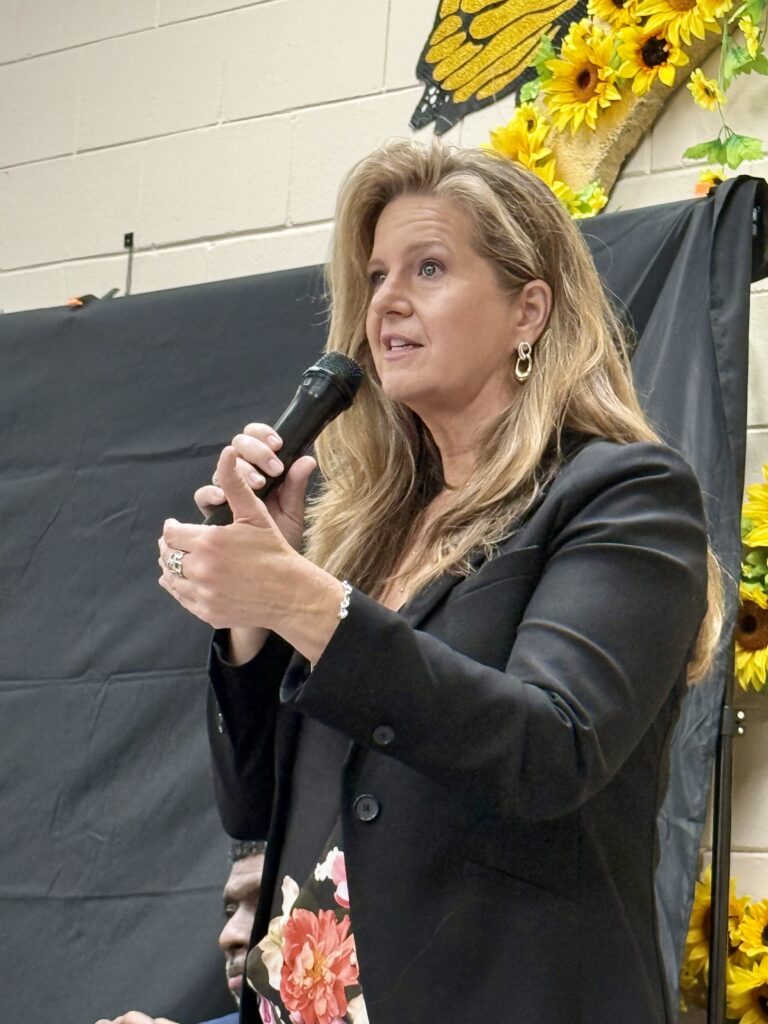
“I also know that with our stakeholders, our large corporations, who do have a lot of employees, are also working with the county in order to have workforce housing, that we have the ability for the individuals to live in the area where they’re actually the reason that these organizations and these companies are so successful,” Summersill said. “We as elected officials need to make them accountable, to ensure that they understand that if you want to profit and you want to be prosperous in our area, you need to treat our citizens accordingly.”
Budget deficits if property tax amendment’s passage
Audience members provided candidates the final two questions of the evening, with the first giving candidates the opportunity to explain how they would handle budget deficits, particularly in light of the pending state-level property tax amendment (HJR 1-F).
“As the Orange County Clerk of Courts, I’ve had to cut my budget every year,” Russell said. “I’m experienced with cutting a budget while also not laying people off or sacrificing quality of services. So the first thing that I will do is make each department head do a 25% budget cut exercise… and then come meet with me to say what should be kept and what should go.”
Uribe said the smaller cities will hurt from the amendment, listing Oakland and Edgewood as examples. Brown urged the Orlando area’s smaller communities to “come together” in advocacy in Tallahassee.
“For starters, there is the Budget and Tax Reform Commission that meets every 20 years, and they look to deal with things just like what we’re dealing with,” Brown said. “They are here to hear our voice and also make those recommendations on statutes that need to be changed.”
Hodge urged the audience to educate themselves on property insurance, saying the insurance lobbyist presence in Tallahassee has great influence. He also acknowledged the potential of increasing permit fees to make up for the loss in funding. Oliver differed, framing the amendment as a “tax shift.”
“We have to start looking for more practical ways that we’re not going to burden our residents, but also be able to look at government and trim the fat from the government first, and then start looking at other creative ways to save money,” Oliver said.
Immigration
Before closing remarks, an audience member from the Farmworker Association of Florida asked candidates for “measurable policies, programs or partnerships” that would benefit the immigrant community in Orange County.
“What really breaks my heart is the fact that you have law-abiding citizens that go to work every day and contribute to our communities, and they have to worry about ICE knocking on the doors, or ICE being at their bus stops for their kids,” Oliver said. “We need to start educating them on their rights.”
Hodge said he was pleased to hear of Oliver’s “change of heart,” noting that Oliver had seconded the motion to adopt Section 287(g) of the Immigration and Nationality Act in Ocoee. The section authorizes “U.S. Immigration and Customs Enforcement (ICE) to delegate state and local law enforcement officers the authority to perform specified immigration officer functions under ICE’s direction and oversight,” according to the ICE website.
“When cities say they had to sign it, it’s not true — counties, sheriffs, jails, yes, cities, no,” Hodge said. “I have fought with you guys in the trenches, stood at the county commission meetings, met with [Orange County Corrections Chief Louis] Quiñones at the jail to ensure that detainees were given treatment with respect and the dignity they deserve… We’ve got to make sure that everybody in our community feels safe.”
Russell said she was particularly concerned with the “racial profiling” occurring within ICE detainments and emphasized her prior career as a lawyer for Community Legal Services of Mid-Florida.
“When I was a lawyer for Community Legal Services of Mid-Florida, I would go spend my time with Latino leadership, because it’s not just understanding immigration issues — they had questions about landlord tenant issues,” Russell said. “We know we have a huge issue when it comes to domestic violence in this country, and they are afraid to go get services and get an injunction because of what can happen if they go to that courthouse. We have to make sure we can expand those types of programs to give wraparound legal services beyond just what we see as what appears to be legal issues for them.”
Editor’s note: This story has been updated to include a link to the documentation concerning Ocoee’s adoption of Section 287(g).
Author
Suggested Articles
No related articles found.