



Teresa Sargeant
Key Points
- The Apopka Planning Commission approved a special exception permit for a 15,000-square-foot childcare center on Chandler Road with 15 classrooms and 272-child capacity.
- The commission recommended rezoning three residential lots on Sir Arthur Court to RSF-1A for single-family homes despite resident concerns about traffic and flooding.
- Commissioners discussed preserving mature trees, connecting open space, and regulating data centers but took no votes on these topics during their workshop.
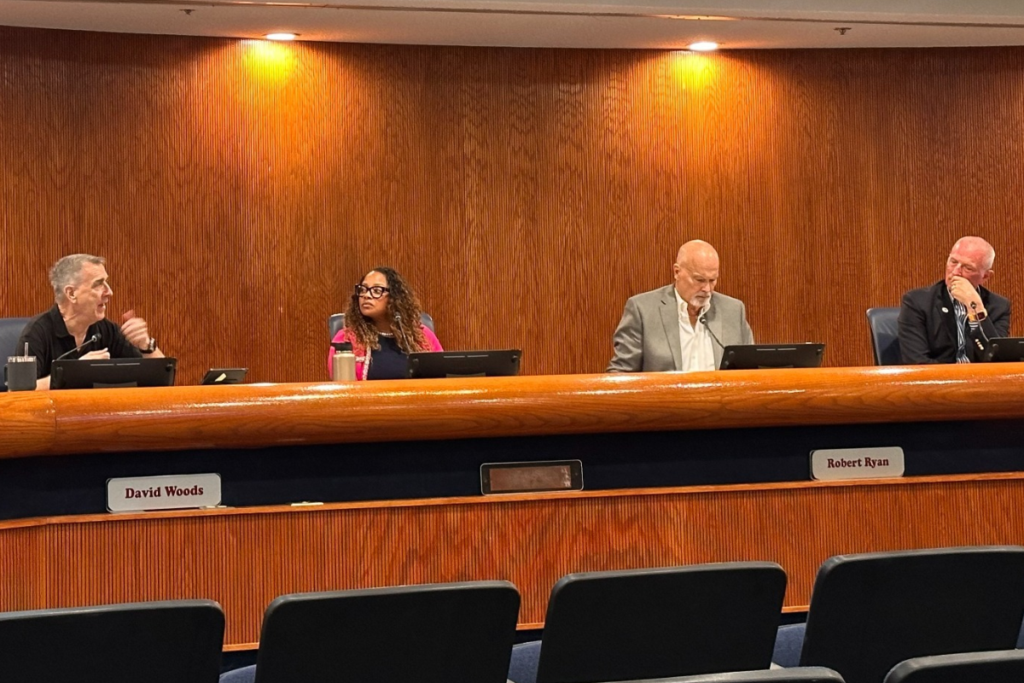
The Apopka Planning Commission unanimously approved a special exception permit for a proposed childcare center on Chandler Road on Tuesday and recommended two land-use changes, including a rezoning for three residential lots.
At a separate workshop that day, commissioners discussed preserving mature trees, connecting open space across developments and regulating data centers.
The residential rezoning would change the three lots – 543, 544 and 552 Sir Arthur Court – from transitional zoning to RSF-1A, a single-family district for larger lots. Residents raised concerns about flooding, drainage and traffic, as well as potential effects on a nearby canal and whether docks could be built on the canal.
“I just am very concerned about the traffic,” said nearby resident Ann Mixson, who told commissioners she lives about three houses away on the cul-de-sac.
Planning staff said flood elevations and setbacks would be addressed during building permit review and that subdividing the lots would require further review. The applicant plans to build one single-family home on each of the three existing lots.
Planning staff said flood elevations and setbacks would be addressed during building permit review and that any future lot split would require separate city review. The Planning Commission unanimously recommended that the City Commission approve the rezoning.
Commissioners also unanimously recommended changing the future land use of the Cathy property, north of Kelly Park Road and east of Effie Road, from county rural to city mixed use. The applicant intends to combine the property with adjoining land for a commercial development with multiple tenants.
City planner Jean Sanchez said the concept plan was presented for information only and that any development would still have to go through the city’s review process.
The commission unanimously approved a special exception permit to allow a roughly 15,000-square-foot childcare center, Joy Child Academy, at 4410 and 4420 Chandler Road, in an office zoning district.
The applicant, Camila Neira, proposed 15 classrooms with a capacity of 272 children, subject to state licensing. When commissioners asked what would happen if the operator left, city staff said the ordinance limits the approved use to a child care facility.
At the Planning Commission workshop earlier that day, Vice Chair Eric Mock compared the way open space is scattered across developments to a Rubik’s Cube. He said one development might set aside land along one edge while the next puts its open space somewhere else, leaving gaps in potential wildlife corridors as Apopka grows north.
Commissioner David Woods said development reviews have tended to focus on what lies within each project’s boundaries. Commissioners and staff discussed whether trails and easements could connect properties and whether grouping homes closer together could leave larger stretches of land intact.
Mock also called for clearer rules on where developers plant trees. He said roots have begun breaking up a bike path outside his neighborhood and questioned why trees are planted directly beneath power lines.
“If we’re going to do this right, we need to do it right from the start,” Mock said.
Commissioners also discussed how the city might regulate future data centers. Commissioner Robert Ryan, who led the workshop discussion, cited potential jobs and property tax revenue and raised concerns about electric rates. Woods asked how much power a data center would use compared with a large manufacturer. Andrew Hand, the city’s legal counsel at the workshop, said local governments can use zoning to regulate large-scale data centers and cautioned that the state could limit local authority.
The commission took no vote on changes to open-space, tree or data center rules during the workshop.