



Photo by Sarah Merly
Key Points
- Apopka celebrated its 144th incorporation anniversary with a proclamation issued by Orange County Mayor Jerry Demings at the Apopka Community Center.
- The city was incorporated on September 2, 1882, originally named The Lodge, with boundaries set one mile from Orange Lodge No. 36.
- By 1920, Apopka was known as the Fern City due to its flourishing indoor foliage industry started by Harry John Ustler in 1912.
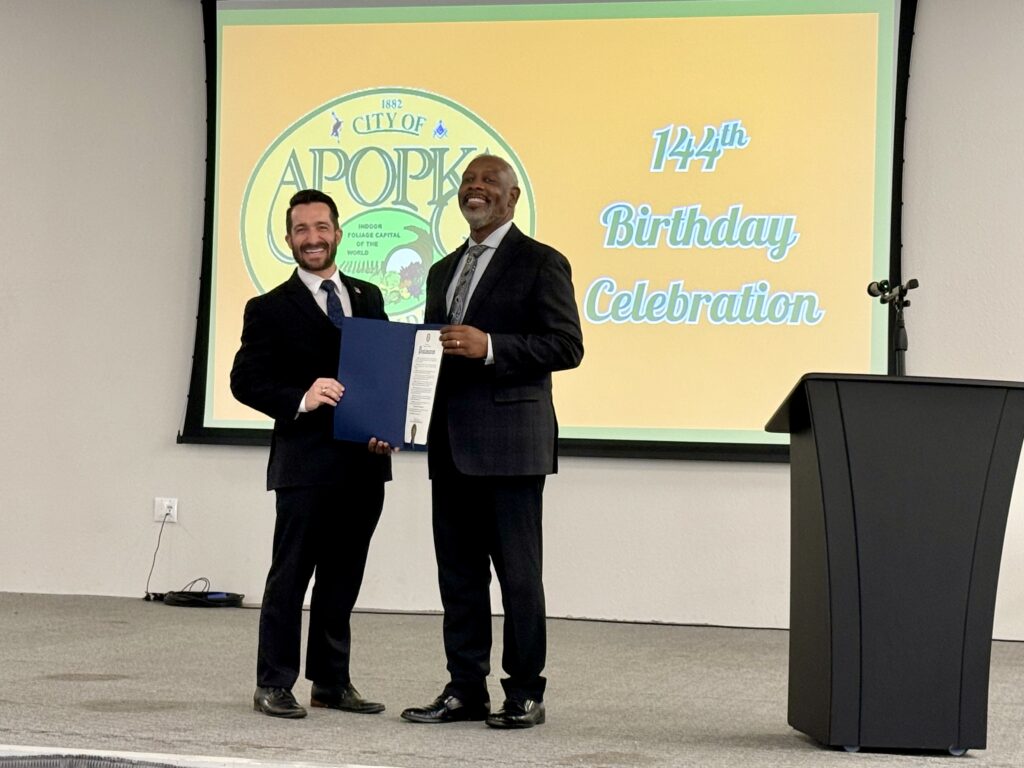
Apopka residents and city officials celebrated the 144th anniversary of Apopka’s incorporation Wednesday at the Apopka Community Center, where Orange County Mayor Jerry Demings issued a proclamation in honor of the city’s birthday.
“My father, when he was about 18 years old, came to Florida from Alabama, and he moved to Apopka. This is where he met my mother,” Demings said. “My mother was born in North Florida, and somehow, she ended up here in Apopka, and so because of that union, I’m able to stand here today as the fifth-elected countywide mayor — how about that?”
The Apopka Historical Society and community volunteers followed the proclamation with a presentation of Apopka’s story, starting with the Timucua and Seminole tribes’ settlements, early White and Black settlers from the Deep South, and the founding of Orange Lodge No. 36 F & AM.
“In 1856, Orange Lodge No. 36 was established, becoming one of the earliest permanent institutions in the area,” said Worshipful Master Michael Berry. “The settlement grouped around the lodge as a regional trading center, with people trading animal skins, natural resources, foreign goods and other supplies.”
The settlement, then known as The Lodge due to the Masons’ local influence, was later incorporated as the Town of Apopka City on Sept. 2, 1882.
“During August of 1882, the Apopka Citizen newspaper carried a notice that on September 2, all citizens should meet at Fudge Hall — the lodge — to organize a municipal government, choose a name and seal, and define the limits of the town. This was the official incorporation of the city,” said Apopka Museum trustee Lorena Potter. “The limits of the city were originally one mile from the lodge in every direction, and soon the town began to grow larger.”
Volunteers then recounted Apopka’s role in Florida’s citrus, turpentine and indoor foliage industries.
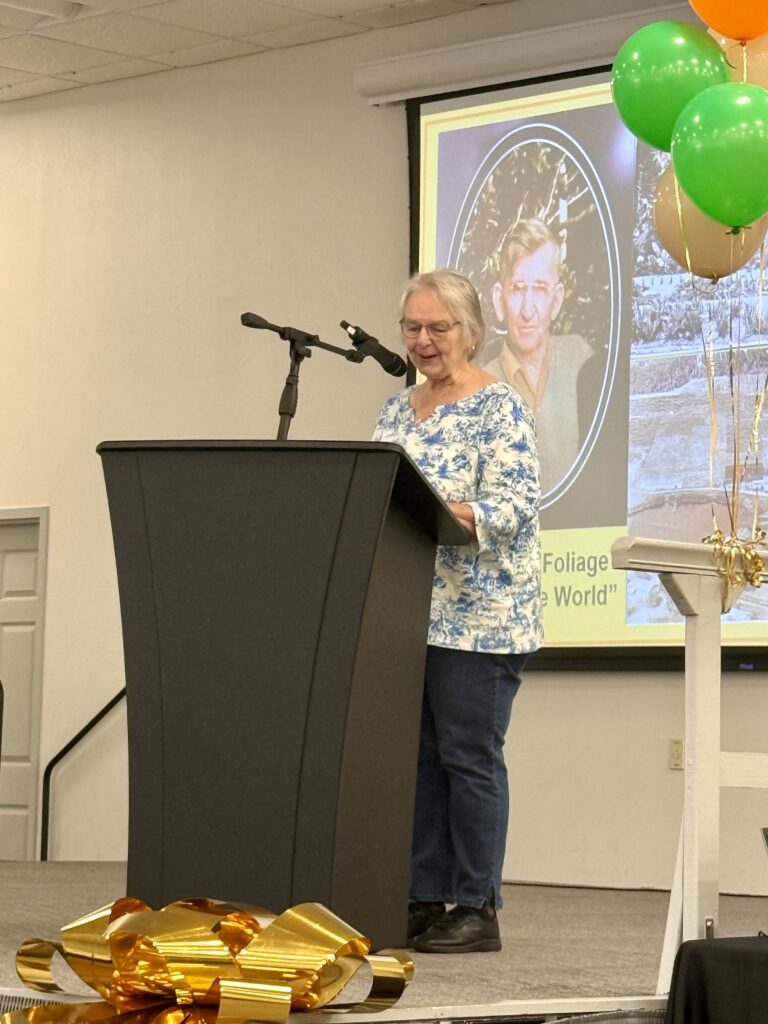
“My grandfather, Harry John Ustler, moved to Apopka in 1912 and created the first foliage nursery in Apopka and all of Florida,” said Judy Ustler. “The warmer clay allowed ferns in Central and South America to be grown in the United States. Others began to grow ferns in Apopka in the 1910s and the 1920s, and the industry here flourished. By 1920, Apopka was known as the Fern City.”
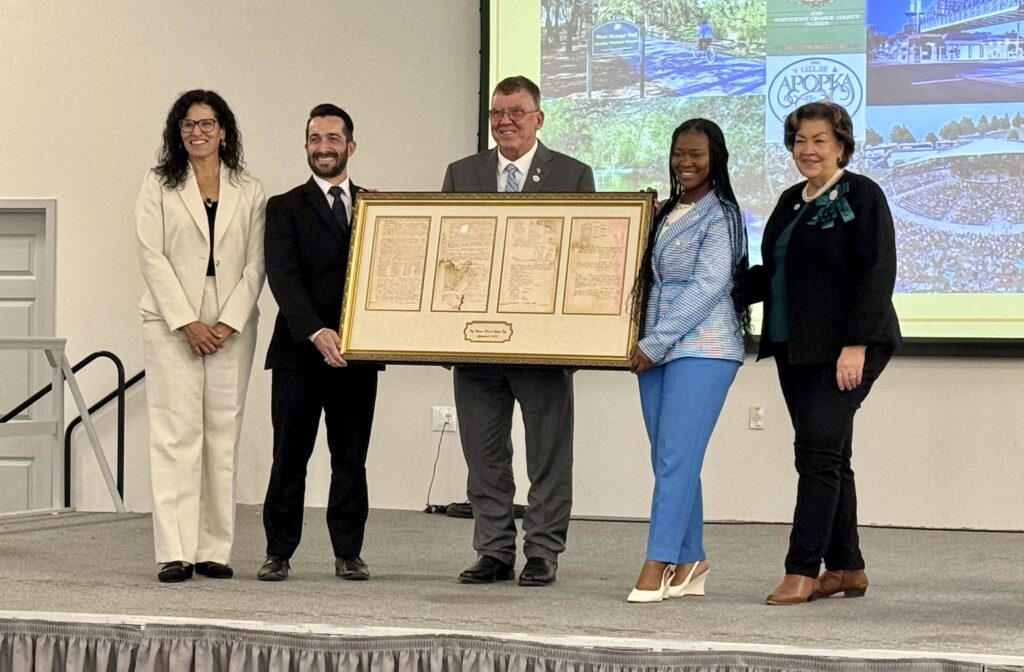
Other community members discussed the Cyclone of 1918 and the city’s long-repealed segregation ordinance, then brought listeners to where Apopka stands now as Orange County’s second-largest city. Afterward, Apopka Historical Society President Maribel Brinkle gifted the Apopka mayor’s office with the city’s original incorporation papers.
“Our story began as a small trading station in northwest Orange County in 1882. We were officially incorporated as the Town of Apopka City,” said Mayor Nick Nesta in his closing remarks. “From those humble beginnings, generations of families, farmers, business ownersand community leaders helped build the remarkable city we are proud to call home today. As we honor that rich history, we also recognize that Apopka stands at the threshold of a new era. Our city is growing, opportunities are expanding, and our future is filled with promise. Through every change, we will remain committed to preserving the character, traditions, and sense of community that make Apopka so special.”
Author
Suggested Articles
No related articles found.