


File Photo
Key Points
Before his second professional basketball season begins nearly 4,300 miles from home, Zach Anderson is spending his summer in a familiar place.
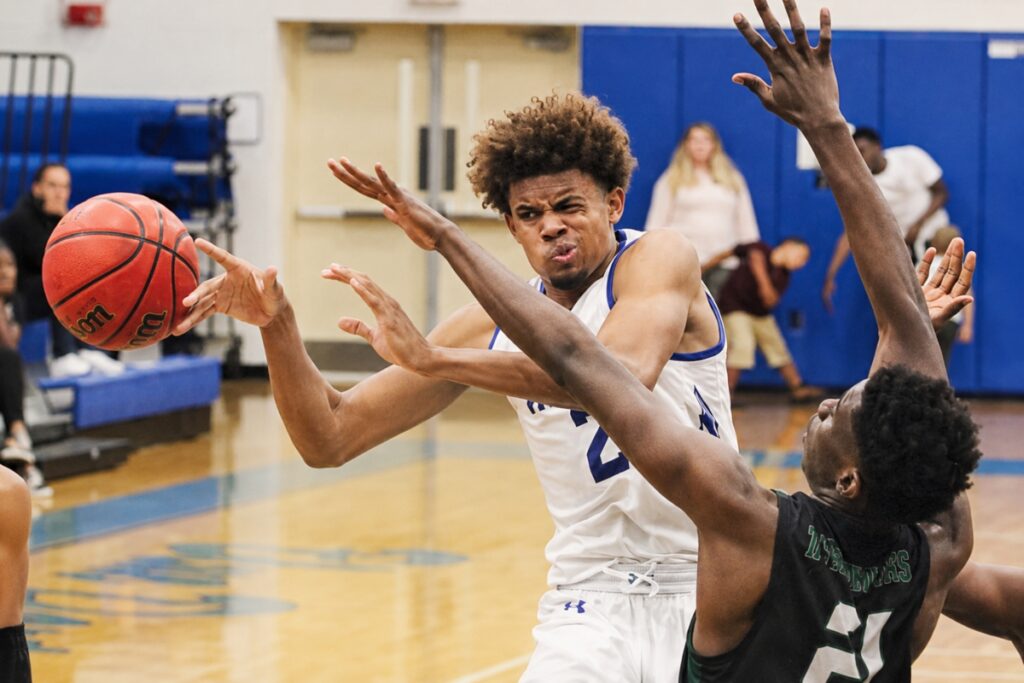
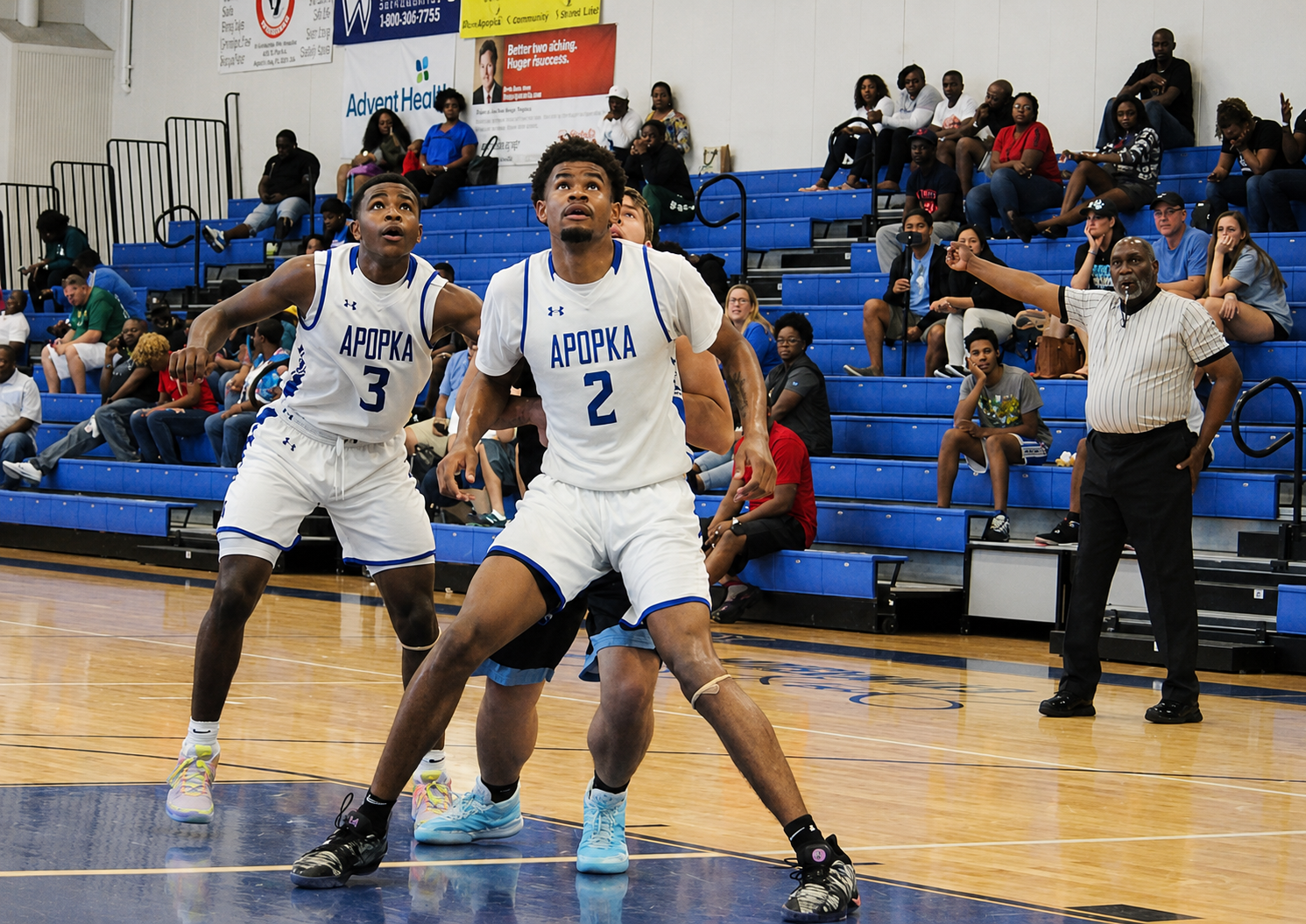
Inside Apopka High School’s gym, where he once helped lead the Blue Darters to one of the program’s most successful stretches, Anderson is working his way back from a knee injury suffered late last season while preparing for another year with the Bristol Flyers in England’s Super League Basketball.
Long before Anderson became a professional overseas and developed into one of the nation’s top 3-point shooters at the collegiate level, he was simply another Apopka kid learning the game under longtime Blue Darters coach Scott Williams.
Now, after re-signing with Bristol for the 2026-27 season, Anderson’s basketball journey continues to carry him around the world while remaining firmly rooted in the lessons he learned at home.
“I went to Apopka Elementary, Apopka Middle and Apopka High School, so I’ve been a Blue Darter my whole life.” Anderson said. “Everybody that I kind of grew up with around the neighborhood, or even neighborhoods that are close, I’m still close with. I’m still close to all my family and they all live around here.”
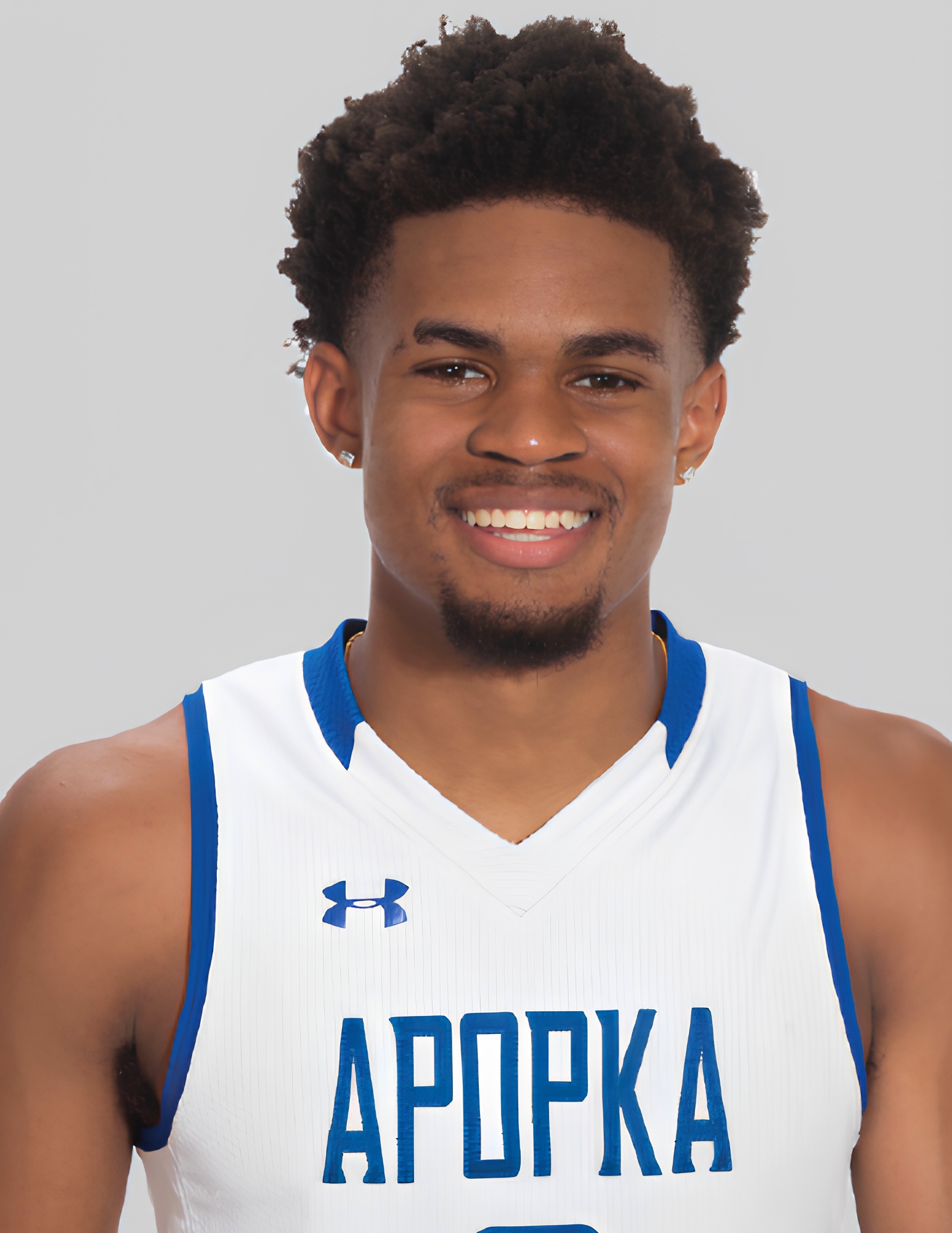
Anderson graduated from Apopka in 2020 after establishing himself as one of the program’s top players. He finished his career with 774 points, ranking 17th in school history, while earning second-team Class 7A All-State honors, two All-Metro selections and All-Central Florida second-team recognition.
His senior season showcased his versatility.
The 6-foot-7 forward averaged 15.1 points and 9.3 rebounds while leading the Blue Darters with a 53% field-goal percentage, 223 rebounds, 53 assists and 31 blocks. Apopka finished 19-10 and advanced to the regional semifinals.
When Anderson looks back on his high school career, the relationships he made stand above any accolade or statistic.
“My sophomore year of Apopka basketball is where I started to take off.” Anderson said. “I was around a bunch of great guys and great seniors. I went from JV to varsity my ninth to tenth-grade year, so it was kind of tricky finding out the ropes. But to have good leadership and good seniors behind me kind of made it easy.”
“We had a really, really good year that year. It was just fun overall, and it helped me develop into my junior year, which was probably my best year in high school. As a team, it was probably my favorite year as well.”
Williams said Anderson’s impact stretched well beyond the stat sheet.
“The crazy thing is, the skill set that continues to open doors for him professionally, to make a really good living playing basketball, is the skill that was the last to develop,” Williams said. “Zach’s always just been a really complete basketball player with a great IQ. I always told people he was a Swiss Army knife because he was complete in every area. He could help you win. His length and size allowed him to be a great defender and rebounder. He was athletic. He was a natural facilitator and really understood where the ball needed to go.”
Williams said Anderson also became one of the foundational leaders during what he considers a golden era for the program.
“When your best players are your hardest workers and they buy into your culture, everybody else follows,” Williams said. “Zach was at the forefront of that.”
After graduating, Anderson spent four seasons at Florida Gulf Coast University, where his game continued to evolve.
By his final season with the Eagles, he started 31 games, averaged 12.8 points and 5.1 rebounds, and shot 45.9% from 3-point range, finishing among the nation’s top long-range shooters.
He then transferred to George Mason University for his final year of eligibility, starting 31 games while again leading his team in 3-point shooting at 40%.
Williams said that growth didn’t happen by accident.
“He goes to college ready to play because he could defend, he had length, athleticism and basketball IQ,” Williams said. “But he wasn’t a great shooter yet. You fast forward to his last year at Florida Gulf Coast, and he’s one of the top 3-point shooters in the country. That’s extraordinary. That opens doors. George Mason wanted him because he rose in level, and now in Bristol he’s making a living because he still does everything else, but if you leave him open, he’s a bucket. That’s all about persistence. He worked extremely hard.”
Anderson credits Williams for preparing him long before he reached college.
“Coach Williams obviously is a great coach when it comes to skills, but I think understanding the game is what he really taught me,” Anderson said. “When I went to college, it was an easy transition because practices were very similar. Coach Williams runs a very college-style practice. Everything’s very professional and held to a high standard. It wasn’t necessarily the skill part because I developed more in college, but I understood the game at such a high level that it automatically put me over people I was going against.”
That preparation helped again when Anderson signed his first professional contract with the Bristol Flyers.
His agent presented different opportunities, but one stood out.
“He came back with about three different teams and kind of laid out the good and bad about each one,” Anderson said. “At the end of the day, it was my decision. Bristol just seemed like it had the most to offer. I also wanted to go somewhere where I didn’t have to learn another language my first year. Being away from family already, it just made sense to go somewhere that was similar to the States. They give you a car, a nice flat to live in, and everything just kind of made sense.”
The adjustment still proved challenging.
Moving from Florida to England meant far more than learning a new basketball system.
“I would say it’s a cultural difference, which is probably the toughest thing,” Anderson said. “It rains every day in the UK. Everybody walks everywhere. It’s just a different lifestyle.”
Being away from home remained the hardest challenge for Anderson.
“The biggest thing was not seeing family. My family could drive three hours to Florida Gulf Coast.. Overseas, those flights are over $1,000. You go eight months just focusing on basketball. Everybody you meet is brand new. New teammates, new coaches, new fans. You have to build all those relationships from scratch.”
Despite those challenges, Anderson flourished.
He appeared in 32 league games during his rookie season, averaging 11.7 points and 5.1 rebounds while helping Bristol compete in both Super League Basketball and the European North Basketball League.
“My rookie season was actually great,” Anderson said. “You hear stories about bad living situations or coaches not paying on time, but I feel like I was extremely blessed to end up with the Bristol Flyers. My coach is somebody you want to play extremely hard for because he cares about you as a person, not just as a basketball player. That goes a long way.”
Re-signing for a second season came naturally.
“It was definitely an easy decision,” Anderson said. “I had a good year, but to my expectations I don’t think I played the best basketball I could have. I feel like coming back for a second year gives me the best opportunity to improve on what I did last season, and then maybe my third year I can go chase my dream of playing at the highest level overseas.”
For now, Anderson’s focus is set on winning.
Unlike college basketball, England offers four trophies during a season — two in-season tournaments, a regular-season championship and a playoff title.
“Obviously, I want to win a championship,” Anderson said. “Winning helps everybody, especially overseas. If you’re on a bad team, you might average a lot of points, but that doesn’t necessarily do anything for you. Coaches at the highest-level look at winning.”
His long-term goal remains reaching the EuroLeague, widely considered the highest level of professional basketball outside the NBA.
“I just want to reach the highest level of European basketball there possibly is,” Anderson said. “Whether that’s the EuroLeague or wherever the highest level ends up being, I just want to put myself in the best position.”
As Anderson prepares to leave for England again at the end of summer, his offseason routine hasn’t changed much.
He’s back inside the same gym where his basketball foundation was built, surrounded by family, lifelong friends and the community that helped shape his career.
Author
Suggested Articles
No related articles found.