



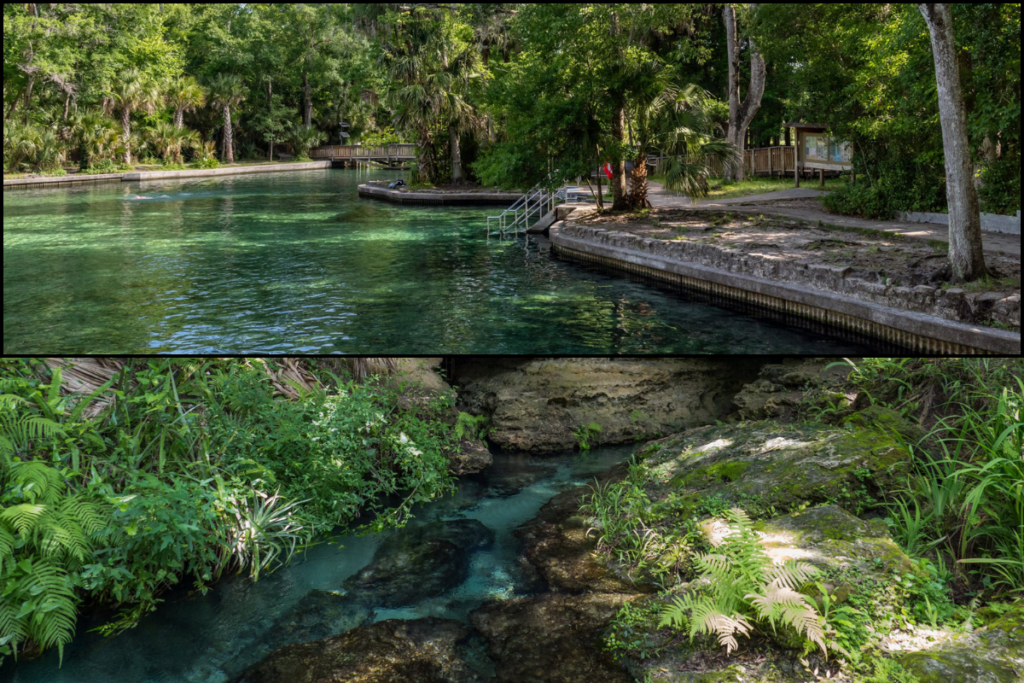
Courtesy of St. Johns River Water Management District
Key Points
- Recent rainfall brought some relief to Central Florida, but drought conditions continue across the St. Johns River Water Management District. Significant rainfall deficits persist with Lake County 11.
- Drought conditions persist across the St. Johns River Water Management District despite recent storms and below-average rainfall over the past year.
- Nearly 3 feet of rainfall over three months is needed to return drought conditions in the St. Johns River Water Management District to normal levels.
Recent rainfall has brought some relief to Central Florida, but significant rainfall deficits remain across portions of the St. Johns River Water Management District, with full recovery expected to require sustained above-average rainfall.
The district reported Aug. 21 that drought conditions continue despite recent storms during Florida’s summer rainy season. Rainfall has remained below average for much of the past year across the district, preventing groundwater supplies and river flows from fully recovering.
Clay Coarsey, the district’s director of water supply planning and assessment, said in an Aug. 19 interview that some of the most severe conditions have occurred in northern and central portions of the district.
“We’re not necessarily getting enough to get above and beyond that average that we need to dig ourselves out of the hole,” Coarsey said.
Coarsey said nearly 3 feet of rainfall would be needed over three months to return the current drought conditions to normal moisture levels.
Rainfall deficits have been particularly pronounced north and west of Orange County. As of Aug. 18, Lake County had accumulated an 11.39-inch rainfall deficit over the previous 12 months, according to the district. Alachua County was 17.31 inches below average and Marion County was 16.62 inches below average.
Summer rainfall also does not necessarily translate directly into groundwater recharge. Heat causes water to evaporate, while growing plants absorb water through a process called transpiration, Coarsey said.
Orange County has fared better.
Coarsey said Orange County had received about 45 inches of rainfall over the preceding year. Groundwater levels also were performing better than in counties farther north.
Flows at Wekiwa Springs and Rock Springs remained within their normal ranges in July, while Silver Springs, farther north in Marion County, was at the bottom of the very low range for that time of year, according to the district.
Despite Orange County’s comparatively better conditions, residents should continue conserving water.
Coarsey said about half the water used by a typical home goes toward outdoor uses. He encouraged residents to make sure irrigation timers are properly programmed and that they are not watering more frequently than permitted.
The district continues to monitor rainfall, groundwater levels, river flows and other indicators to determine when water-shortage restrictions can be modified or lifted.
Coarsey said one challenge is that Florida’s groundwater shortage is largely invisible to residents, unlike low lakes and reservoirs where receding water levels can be easily seen.
“I think it’s hard for people to understand that we’re at near record-low groundwater levels in certain parts of the state,” Coarsey said.
Continued conservation can help preserve groundwater supplies while the region waits for enough rainfall to replenish the aquifer, he said.
Author
Suggested Articles
No related articles found.