



Vinnie Cammarano
Key Points
- Orlando Health and Acadia Healthcare opened a new 144-bed Behavioral Health Hospital in Apopka to address Central Florida's mental health needs.
- The 100,000-square-foot hospital offers inpatient care, partial hospitalization, outpatient programs and electroconvulsive therapy.
- Mayor Nick Nesta noted the hospital supports job creation and strengthens Apopka's role as a healthcare hub in Central Florida.
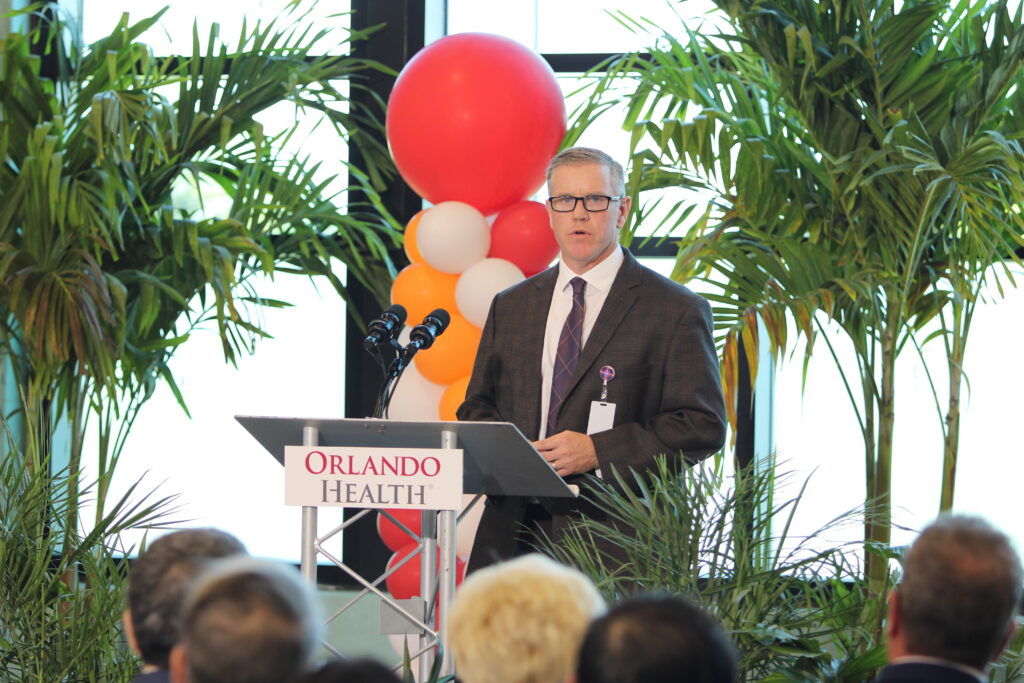
Apopka officials, healthcare leaders and community members gathered Friday morning to celebrate the opening of the new Orlando Health Behavioral Health Hospital, a 144-bed inpatient facility that leaders said is intended to help address growing mental health and substance abuse treatment needs across Central Florida.
The ribbon-cutting ceremony marked the public debut of the new 100,000-square-foot hospital at 1452 S. Orange Blossom Trail, a joint venture between Orlando Health and Acadia Healthcare that is expected to begin serving patients next month. The facility will provide behavioral healthcare services for children, adolescents, adults and senior adults experiencing acute mental health needs.
Hospital leaders said the project represents a major expansion of behavioral healthcare access in the region at a time when demand for services continues to grow.
“This hospital exists because leaders recognized a need across Central Florida and greater Orlando for better access to behavioral healthcare, and they made a commitment to address it,” Acadia Healthcare CEO Debbie Osteen said during the ceremony.
According to hospital materials distributed at the event, the facility will offer acute inpatient care, partial hospitalization, intensive outpatient programs and electroconvulsive therapy. The hospital also will treat patients with co-occurring substance abuse disorders.
Edward Smith, CEO of Orlando Health Behavioral Health Hospital, described the project as one of the most significant healthcare investments made in the region’s behavioral health system in decades.
“Every day, people find themselves in behavioral healthcare settings on the most difficult days of their lives,” Smith said. “They are parents, children, coworkers, neighbors.”
Smith said the hospital is designed not only to help patients in crisis, but also to support long-term recovery through a continuum of care that includes inpatient and outpatient treatment options.
“This hospital expands how we care for people,” Smith said. “It allows us to build a continuum of care that supports individuals not just in crisis, but long after they recover.”
Dr. Matt Angelelli, chair of behavioral health for Orlando Health, said clinicians are seeing a broad range of mental health conditions, including anxiety, depression, post-traumatic stress disorder, schizophrenia and bipolar disorder.
“There’s more stress in the world, so people have a harder time coping,” Angelelli said in an interview following the ceremony. “So we’re seeing more people that need help.”
Angelelli also said healthcare providers continue to see strong demand for youth behavioral health services.
“It’s always been busy, but it’s still busy,” Angelelli said.
One of the major challenges behavioral health providers face, Angelelli said, is the shortage of inpatient beds, which often leaves patients waiting in emergency rooms for treatment placement.
“They sit in emergency departments,” Angelelli said. “And then this is what’s nice about this place – it’s big enough that we’ll make a dent in it. It’s not going to take care of it all, but we’ll make a dent in it.”
Angelelli said the new facility differs from many older behavioral health centers because it was purpose-built as a behavioral health hospital rather than retrofitted into an existing building.
“A lot of places are built as afterthoughts,” Angelelli said. “This was built to be a behavioral health unit from the beginning.”
He said the design allows safety features to be built in from the start, rather than added later to an older building.
Mayor Nick Nesta, who spoke during the ceremony, called behavioral healthcare “one of the most urgent challenges facing our region and our nation.”
“This facility represents a major investment in the health and future of our community,” Nesta said. “It reinforces Apopka’s role as a growing hub for healthcare in Central Florida.”
Nesta said the hospital represents an investment in workforce development and future healthcare professionals.
“This also helps support job creation and strengthens our local healthcare workforce,” Nesta said.
Osteen said behavioral health challenges affect communities nationwide, with many individuals delaying treatment because of stigma or concerns about how seeking help could affect their personal or professional lives.
“But we know that when care is available close to home, people are more likely to seek help, and they’re more likely to seek help sooner and stay connected to treatment,” Osteen said.
Author
Suggested Articles
No related articles found.