



File photo
Key Points
- Apopka City Council approved a joint proposal for soccer field use at Northwest Recreation Complex by two youth soccer organizations sharing four active fields.
- Apopka city staff will negotiate a contract for the joint rental agreement after council approval and may seek final council consent once terms are set.
- Concerns were raised about the city’s RFP process increasing youth sports fees compared to other sports, with calls for partnership over competition.
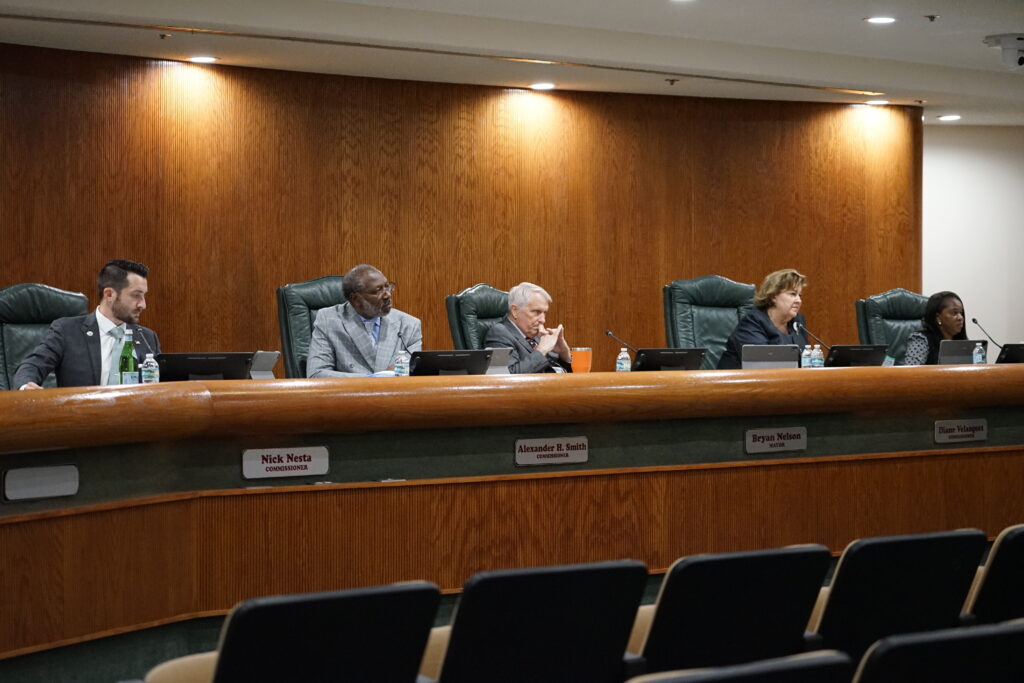
The Apopka City Council unanimously approved on Wednesday a waiver of its purchasing policy to accept a joint proposal from two youth soccer organizations for use of fields at the Northwest Recreation Complex and to authorize negotiation of a contract for those rentals.
The decision clears the way for the city to negotiate a joint rental agreement with Central Florida United Soccer Academy and Central Florida Soccer Club, which have agreed to share the field space.
City Finance Director Blanche Sherman told the council that the joint proposal covers use of four active fields.
If the City Council accepts the joint proposal and authorizes the negotiation, city staff will negotiate the contract and may return to the council for final approval once terms are finalized, Sherman said.
Under the plan, the two organizations would divide those four fields, with each initially using two.
Brian Furgala, a coach and board member with Central Florida United Soccer Academy, said the groups agreed the split was the most practical solution.
“There are four current fields. We decided that the best thing to do, if we were going to mutually agree to something, is to split those into half,” Furgala said.
Naji S. Khouri, president of the Central Florida Soccer Club, supported the joint field‑sharing plan but urged the city not to rely on competitive RFPs for youth sports, warning that they can hurt long‑standing nonprofit programs and drive up costs for families.
To illustrate his point, Khouri cited a past Orlando case where a for‑profit group outbid a nonprofit, raised fees and later went bankrupt.
“This is what happens when youth sports are treated like a commercial contract instead of a partnership with the city,” he said. “There’s room, place, space for both organizations to co-exist at the end of the day for the benefit of our children.”
The city is also moving forward with plans to construct additional soccer fields at the complex, according to interim City Administrator Radley Williams.
Williams said the city recently received a permit from the St. Johns River Water Management District and has sent finalized plans to two qualified contractors for secondary quotes.
Once those quotes are received from the approved vendors, he said, the city expects to move quickly into construction, with a goal of finishing work by late May or early June.
“So that would allow us a … month and a half, to get the sod established and get a couple fields online,” he said.
Williams said the city opted to issue a request for proposals because of the high demand for sports field space.
“If we built 20 fields tomorrow, we still would have demand for those fields,” Williams said. “We have been getting continual outreach for groups looking for space.”
During public comment, Sylvester Hall questioned why the city suddenly required an RFP and asked the City Council about the data justifying changing a long-running system that previously worked.
“I want to know because there’s a cause and then there’s an effect,” Hall said. “What we’re dealing with now is the effects of a decision that was made. So we have to get back to the cause.”
Rod Olsen criticized the city’s fee structure for youth soccer groups compared with other sports programs.
“The fact that baseball, softball, Little League, Pop Warner, flag football, enjoy rates of $2 to $3 an hour a field – it’s inexplicable that you can charge $25 an hour, which has been the historical number that these organizations have had to pay, plus pay for game time,” Olsen said. “The other sports do not. Youth sports organizations do not pay for game time. They have the fields.”
Other commenters praised the two organizations for working together to reach an agreement.
“I personally just want to commend these two groups for working together … and for everyone who’s put the children first,” Dr. Jim Moyer said.
The joint proposal stemmed from the council’s tabled decision on Feb. 18 about priority access to the soccer fields after disqualifying Central Florida Soccer Club for violating the request for proposals’ (RFP) “cone of silence” rule, leaving Central Florida United Soccer Academy as the sole recommended bidder.
The council asked the two organizations to develop a shared-use plan for existing and future fields, while city staff works to speed construction of six new fields to accommodate both leagues and local youth programs.