



Bev Winesburgh
Key Points
- Matthew's Hope plans to start a sleeper bus program in Orange County by mid-2026 to provide homeless individuals safe rest spaces for three nights.
- The initiative, backed by a $787,000 Orange County contract and Apopka's partnership, responds to Florida's HB 1365 banning public sleeping.
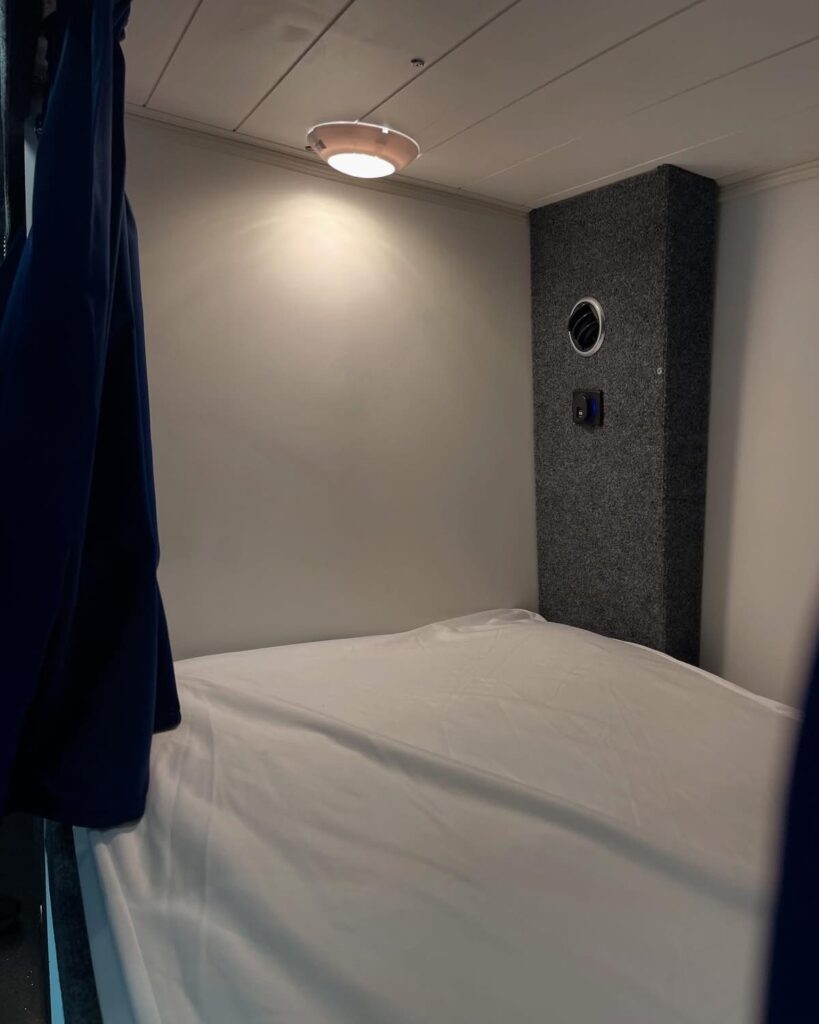
- Matthew's Hope refurbishes used buses with 20 bunks, which include high-quality mattresses, individual climate controls, lights, and power outlets for charging phones.
For the thousands of individuals in Central Florida experiencing homelessness and all its struggles, the thought of a “good night’s sleep” may be an unattainable goal.
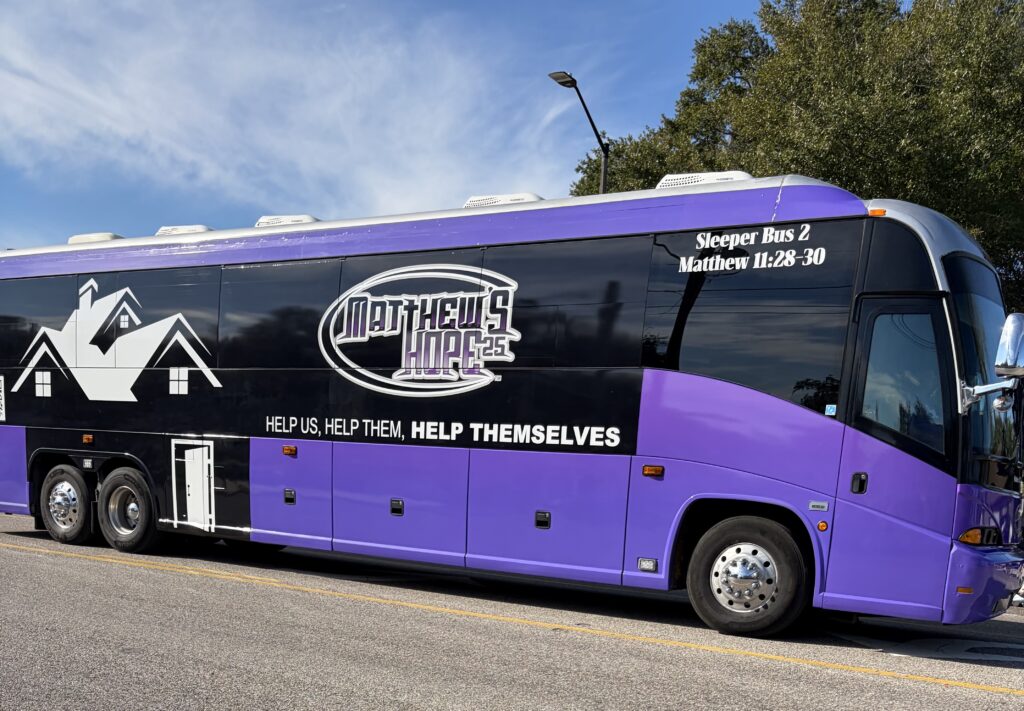
However, a new partnership between Matthew’s Hope, the city of Apopka, and Orange County is aiming to change that narrative through an innovative, mobile solution: the sleeper bus.
The sleeper bus rollout has been a measured process, informed by ongoing testing at the organization’s Brevard County branch.
Matthew’s Hope, a homeless outreach organization with offices in Winter Garden and Cocoa, is hoping to begin the sleeper bus initiative in Orange County, starting in Apopka, by the end of the first quarter of 2026.
Yet, Pastor Scott Billue, founder of Matthew’s Hope, said that most likely, the initiative will be introduced in the second quarter of 2026 once the nonprofit obtains another bus, refurbishes it and secures host sites and infrastructure such as electricity.
Taking action
Florida House Bill (HB) 1365, which went into effect in 2024, prohibits sleeping in public spaces and spurred municipalities around the state to scramble to find the best ways to deal with burgeoning homeless populations. Matthew’s Hope established the sleeper bus program as a direct response to the legislation.
For Scott Billue, the founder of Matthew’s Hope, the bus program responds to a legal environment that he believes often criminalizes poverty without offering viable alternatives.
Billue said HB 1365 suggested municipalities create managed encampments, giving people the option to go to these available services or else risk arrest. Over a year later, not one municipality or county has succeeded in fulfilling this public need, Billue said.
“This is why we decided – and we figured it that’s exactly what would happen – we decided to pursue the idea of a sleeper bus,” he said.
To bring its vision to fruition, Matthew’s Hope had to find significant financial investment and mechanical ingenuity. The nonprofittypically looks for gently used MCI J4500 buses, which Billue called a reliable brand. While a brand-new bus of this type can cost $600,000, the nonprofit can buy and refurbish a used one for about $200,000.
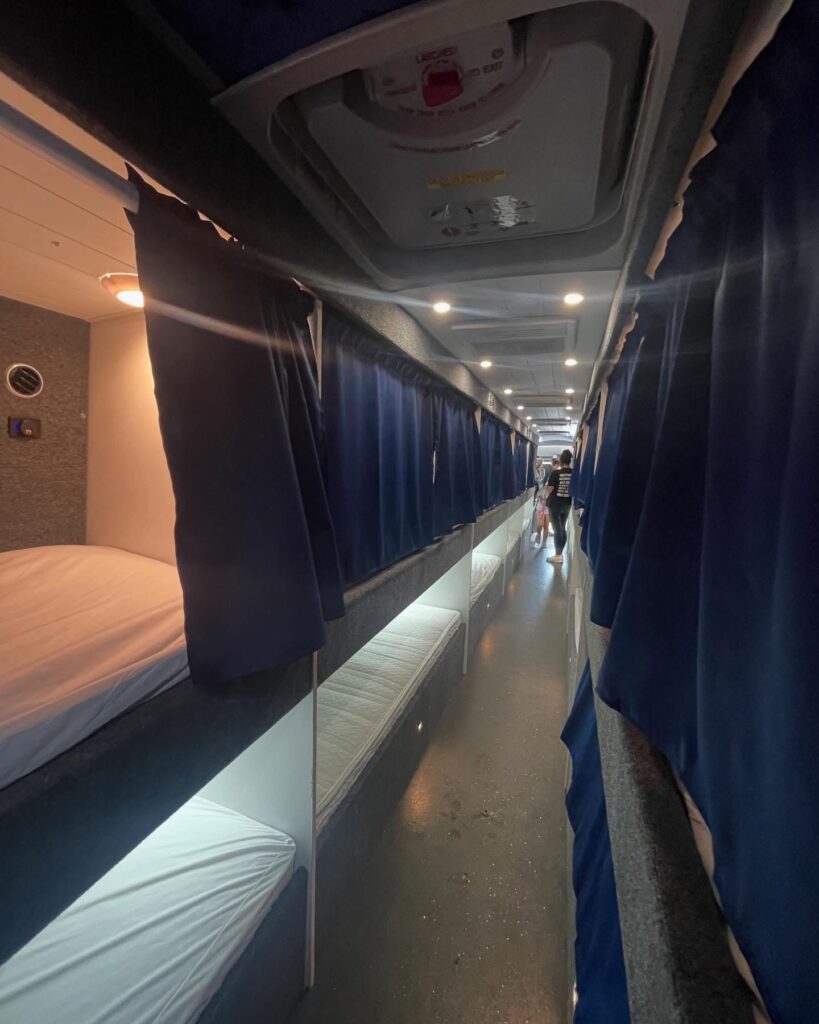
To renovate a bus, the interior is stripped completely to make space for 20 custom-built bunks. Each bunk is equipped with high-quality mattresses, individual climate controls, lights and power outlets for charging phones.
Security is also a top priority. Each bus travels with a certified security guard and a driver, ensuring that both the guests and the host sites remain safe and respected.
“Our mattresses are as nice as any mattress you’ve got at home,” Billue said. “They can pull the curtains so they can have privacy … their belongings will be underneath, locked away and safe.”
A partnership for progress
Rolling out the sleeper bus initiative was made possible by a roughly $787,000 one-year contract that the Orange County Board of County Commissioners approved at its Dec. 2 meeting.
“[The buses] will serve residents all over west Orange County in an effort many have worked tirelessly to bring today,” District 1 Commissioner Nicole Wilson said at the Dec. 2 meeting. “I am so thrilled to support him in the homeless outreach efforts of Matthew’s Hope and the unbelievable dedication he has to improving people’s lives.”
But the “big hump,” Billue said, was getting a city to partner with Matthew’s Hope on the initiative. This was where the city of Apopka stepped up.
In June, the Apopka City Council voted for the city to be a partner in the sleeper bus program. At the Dec. 3 City Council meeting, Mayor Bryan Nelson expressed a commitment to speak with area churches and get the necessary electrical infrastructure in place.
“It might be six months before we get the sleeper bus, but it’s on its way and so we just want to make sure we’ve got the location,” Nelson said at the Dec. 3 City Council meeting. “If you’ve got any locations that people would [think] make sense, feel free to give us a call because we’ve got to get with Duke Energy to make sure we’ve got the power needed to run the sleeper bus.”
Because the refurbished buses are technically retitled as RVs, zoning for parking can be a complex hurdle. Apopka’s willingness to provide property and help identify other host sites, such as local churches, was what convinced Orange County to release the funding, according to Billue.
Billue said he intends to start contacting area churches and nonprofits after the holiday season to set up 50-amp electrical hookups, which let the buses run quietly and efficiently without burning fuel.
“We had to wait until we got to this point,” Billue said. “It didn’t make sense to pursue churches or anybody until we knew we had the funding, and we knew we had the backing of Apopka.”
The sleeper bus is not a permanent housing solution, but rather a strategic intervention. Each bus is designed to house 20 people for three consecutive nights. This specific timeframe is not coincidental. Billue said it is rooted in the physiological needs of the human body.
“Science has proven that you need three nights of good rest to reset your body clock,” Billue said.
He described the “radar” that homeless individuals must keep up at all times – being on guard against animals, other people or the police—which prevents deep, restorative REM sleep.
A lack of sleep is “not dignified [and] creates bigger issues” because that, combined with a lack of nutrition or food and mental health care, is “trouble waiting to happen,” he said.
After those three nights of sleep, Matthew’s Hope aims to transition guests into a wider ecosystem of support that includes mental health counseling, medical care, laundry services and showers.
The faces of the crisis
By rolling out the sleeper bus program, Matthew’s Hope intends to accomplish three things: provide the homeless some safe night’s rest, connect them with additional services and resources to help them get on their feet, and help educate people who have the “not in my backyard” response to those experiencing homelessness.
The homeless community is typically comprised of baby boomers (the generation born between 1946 and 1964), people with physical and/or mental disabilities who have outlived their caregivers, and young families. Currently, 35% of every first-time homeless person approaching Matthew’s Hope is a baby boomer, Billue said.
A lot of misconception surrounds the homeless and the available resources for them, Billue said, adding that many people believe shelters are free, when they’re not. He said something else the public needs to be aware of is substance addiction is usually a byproduct of the lack of mental healthcare, and individuals often use drugs and alcohol to self-medicate.
“Homeless people are a direct reflection of the everyday person in society,” Billue said. “Occasionally, I’ll have someone say, ‘Well, a homeless person burnt down a house.’ No, an arsonist burnt down the house that happened to be homeless; he was an arsonist either way.”
While the sleeper bus can only accommodate a fraction of the 2,000-plus registered homeless individuals in the area, Billue seesevery person helped as a victory. He likened the effort to the classic “starfish” story where an old man saves one stranded starfish at a time because “it made a difference for that one.”
“It’s going to make a difference for those 20 for those three days, and 20 more after that, and 20 more after that,” Billue said. “When you got 20 and you take 52 weeks a year or 365 days a year, now you’re talking about thousands of people who got touched. That’s how we got to look at this thing.”
Author
Suggested Articles
No related articles found.