



Photo by Dana O'Connor
Key Points
- The Apopka City Council approved a policy allowing up to $5,000 in legal fee advances for elected officials facing related civil or administrative cases.
- The policy requires officials to submit a written reimbursement agreement and repay the city if they lose their legal case within 30 days unless the council approves otherwise.
- Commissioner Nadia Anderson recused from the vote due to a pending residency lawsuit filed by attorney William McLeod in September.
The Apopka City Council on Wednesday voted 3-1 to approve a new policy allowing the city to advance public funds to cover certain legal expenses for the mayor and city commissioners involved in non-criminal legal actions tied to their official duties.
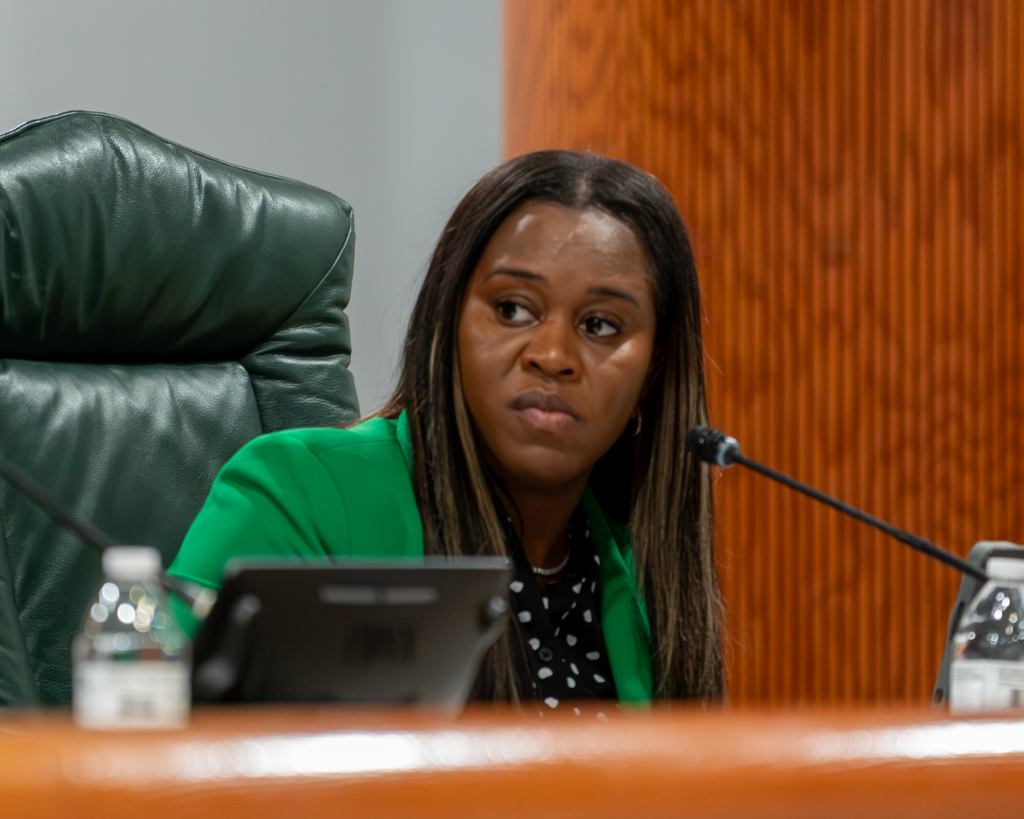
Commissioner Nadia Anderson recused herself from the vote because she is currently involved in a pending lawsuit challenging her residency. Local attorney William McLeod filed the suit in September.
Effective immediately, the resolution sets up a formal process for advancing up to $5,000 per case to elected officials facing civil or administrative proceedings related to their role in office. If the official ends up losing the case or is not cleared, the individual must reimburse the city.
Andrew Hand, assistant city attorney, said the resolution’s purpose is to ensure elected officials can defend themselves in matters arising from their public service without immediately taking on the full financial burden.
He said the policy applies only to civil or administrative actions – not criminal cases – such as ethics investigations, challenges to an official’s qualifications to hold office, or alleged violations of the city charter.
Under the policy, an official seeking an advance must submit a written request to the city administrator detailing the legal action and providing a cost estimate. The request must then be approved by a majority vote of the council at a public meeting. A written reimbursement agreement is required, specifying that the official must repay the city in full if the case is not resolved in the official’s favor.
According to Hand, the resolution defines “successful” as having allegations dismissed, being exonerated, or otherwise prevailing on the merits. If an official does not meet that standard, repayment would be due within 30 days of the final decision unless the council approves an alternative arrangement. City staff would maintain accounting records for all advances.
The proposal drew sharp criticism from residents during public comment, with speakers questioning the fairness of using taxpayer funds to front legal costs for elected officials.
“Whether you get off or you’re found guilty, you need to be responsible for your own bill, because if it’s a citizen out there, if something happens to them and they get charged, the city ain’t coming to their rescue,” resident Leroy Bell said.
Other speakers argued that existing insurance coverage or reimbursement after a case finishes would be more appropriate, and also that the resolution could create the appearance of preferential treatment.
“The city has – I’m assuming, this is a question – the city has general and professional liability. Is that correct?” resident Rod Olsen said. “If yes, then you are covered. You are covered in the performance of your duties. If it’s outside that, then we have no business. The city has no business in providing you money.”
Supporters, including Mayor Bryan Nelson, said the policy protects public officials from being financially strained or even ruined by lawsuits filed over their official actions, even when those actions are ultimately deemed lawful. Nelson cited past cases where officials had to cover their own legal bills before seeking reimbursement from the city after being cleared.
Commissioners also debated whether the $5,000 cap was sufficient, noting that complex cases can far exceed that amount. Some also questioned the timing of the policy, given ongoing litigation and ethics complaints involving members of the dais.
Earlier this month, Nelson filed a lawsuit against Orange County District 2 Commissioner Christine Moore, challenging her residency and ability to run for mayor. She is running against him in the mayoral election, as well as City Commissioner Nick Nesta.
Nesta urged the council to postpone the vote to refine the language and clarify how the policy would be administered.
ANY self severing policy SHOULD be put to a vote by ballot on the next city election.